
Deep Dive
来自我们记者的行业洞察

Healthcare industry advances AI governance amid lack of federal regulation
With the Trump administration explicitly refraining from intervening in AI regulation, the healthcare industry is taking on AI governance responsibilities itself. Experts at the HIMSS conference noted that the lack of federal standards leaves hospitals and AI developers operating in a regulatory gray zone, while rapid technological evolution (such as generative AI and AI agents) intensifies governance difficulties. States and industry organizations are beginning to fill the gap, but fragmented standards may hinder innovation.

Four Major Trends in Robotic Surgery for 2025: Intensified Competition and Market Expansion
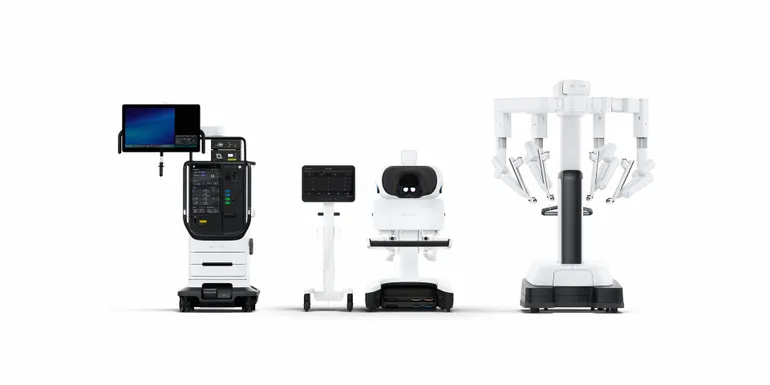
After nearly 25 years of dominance in the robotic surgery field, Intuitive Surgical will face challenges from numerous new entrants in 2025. The full market release of the da Vinci 5 system, the accelerated catch-up by Medtronic and Johnson & Johnson, small companies targeting niche markets, and the penetration of orthopedic robots into ambulatory surgery centers have become the four key directions of industry focus this year.

AI Accelerates Deployment in Medical Technology: Four Trends to Watch in 2025
In 2024, the medical device industry's focus on artificial intelligence increased significantly. Companies such as GE HealthCare, Medtronic, and Dexcom showcased new AI features, while Stryker and Quest Diagnostics expanded their AI assets through mergers and acquisitions. Meanwhile, discussions around regulation and generative AI dominated industry conferences. The FDA recently released relevant draft guidance, but has not yet authorized any devices that are continuously adaptive or use generative AI. Based on interviews with industry experts, this article outlines four trends to watch in 2025: new guidance brings clarity for developers, payment barriers remain, foundation models and administrative tools gain attention, and hospitals need more information to evaluate AI tools.

Five Major Trends in Medical Technology for 2025
In 2024, the medical technology industry made progress in areas such as pulsed field ablation and a rebound in mergers and acquisitions, but 2025 still faces challenges from China and uncertainties under the Trump administration. BTIG analyst Ryan Zimmerman noted that industry fundamentals remain stable and surgical demand is healthy. Based on interviews with multiple experts, this article summarizes five major trends: the competitive battle in robotic surgery between Intuitive Surgical and rivals, sustained strong M&A activity, potential trade war impacts, rapid penetration of PFA technology, and the first year of commercialization for renal denervation (RDN).

Tech Giants Deploy Medical AI Platforms, Clarify Responsible Promotion Paths
At the HLTH conference in Las Vegas, executives from major U.S. technology companies pledged to lead the next wave of innovation in medical artificial intelligence. AI products launched by companies such as Google, Microsoft, Amazon, GE HealthCare, and NVIDIA aim to help healthcare systems address a range of issues, from reducing documentation time to optimizing operating room scheduling. Tech executives stated that they have moved beyond early point solutions toward customizable platform approaches. However, opinions diverged on how to responsibly promote new technologies to the industry and whether clinicians are ready to adopt new tools.

AI holds great potential in healthcare, but its application must be 'extremely cautious'
At the HLTH conference, experts noted that AI is expected to alleviate labor shortages and administrative burdens in the healthcare industry, but deployment must be cautious, with vigilance over accuracy, bias, and safety risks.

Compliance Pathways for Laboratory-Developed Tests under the New FDA Rule: A Five-Step Action Guide
In May, the U.S. FDA issued a final rule bringing laboratory-developed tests (LDTs) under medical device regulation, to be implemented over four years in five phases. Industry organizations have raised concerns about costs and administrative burdens and have filed lawsuits. Institutions such as Yale School of Medicine and ARUP Laboratories are actively preparing. Based on interviews with multiple laboratory executives and industry experts, this article summarizes five recommended actions: establishing complaint and adverse event systems, preparing for subsequent phases in advance, avoiding rework during development, bringing in specialized talent, and paying attention to exemption provisions.

AI Medical Devices Surge Tenfold in a Decade: FDA Cumulative Approvals Reach 950
According to U.S. FDA data, as of August 7, 2024, a total of 950 AI/machine learning medical devices have been authorized. Only 6 were approved in 2015, and 221 in 2023. Imaging dominates the field, with GE HealthCare and Siemens Healthineers leading, and the industry is expanding from imaging into new areas such as cardiovascular and robotics.

Four-Step Strategy: Reducing Cybersecurity Threats of Legacy Medical Devices
As cyberattacks continue to target hospitals, the U.S. FDA implemented comprehensive new regulations last year to strengthen cybersecurity oversight of medical devices, but regulators and cybersecurity experts are still working to address a specific threat: legacy medical devices. Hospitals and health systems across the nation are filled with medical technology running outdated or soon-to-be-outdated software, leaving vulnerabilities in facility network defenses. Experts propose a four-step mitigation strategy: identifying devices, understanding vulnerabilities, network segmentation, and shutting down devices.