
The pandemic gives rise to a highlight moment for telemedicine: where will it go in the post-COVID era?
The COVID-19 pandemic has moved telemedicine from the margins to the mainstream, with usage surging. This article analyzes its growth data, policy changes, potential obstacles, and future prospects, and points out that employers need to incorporate telemedicine into long-term human resource strategies.
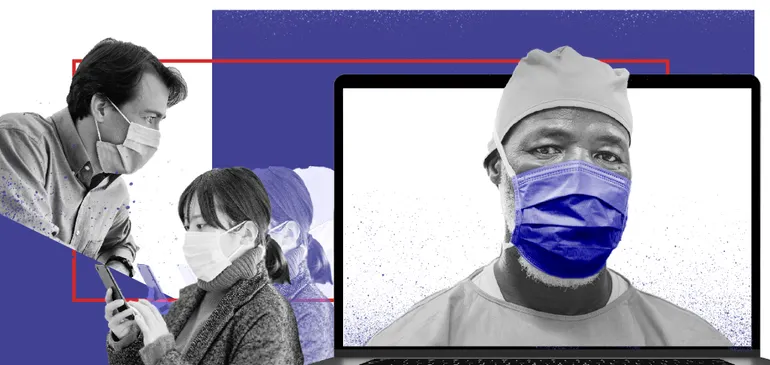
Telehealth — whose subcategory includes telemedicine — has become the go-to option for healthcare providers and patients navigating the logistical and practical challenges of the COVID-19 pandemic. The U.S. Department of Health and Human Services (HHS) defines telehealth to include a variety of non-face-to-face healthcare services.
Some usage data is striking. According to the Association of American Medical Colleges (AAMC), Philadelphia's Jefferson Health hospital network went from just dozens of telemedicine visits per week to scheduling 500 to 600 such visits per day by March, reflecting the network's efforts to shift outpatient care to virtual visits.
Insurers have observed a similar surge. A Cigna spokesperson said in an emailed statement to HR Dive that its virtual care usage tripled compared to the same period in April 2019. Aetna, in an emailed statement, said it waived cost-sharing for telemedicine visits for plan members in March and reported a "significant increase in usage."
This contrasts sharply with past low utilization of virtual care: Mercer reported in October 2019 that among employers offering telemedicine, on average only 9% of eligible employees used the benefit.
At the onset of the pandemic, telemedicine providers were not prepared for the surge in demand. "They didn't have enough physicians to meet the quick turnaround demand," Kate Brown, leader of Mercer's Center for Health Innovation, told HR Dive.
Increased demand caused wait times to spike during what Brown called the "reaction period" — as providers scrambled to adapt to the surge — sometimes exceeding an hour. But even then, such waits might still be better than an in-person visit. "An hour can be a long time, much longer than typical telemedicine waits, but it might still be shorter than seeing a doctor in person," Brown said.
Although the pandemic has been unfortunate for all parts of the healthcare system, Brown and others see it as providing a strong opportunity for growth in telehealth solutions and expect consumers to continue using telehealth after the pandemic subsides.
"I suspect usage will continue once all the emergencies settle down," Kim Buckey, vice president of client services at DirectPath, a benefits engagement and compliance services provider, told HR Dive. "Now that people have had experience with telehealth, employers that haven't offered it yet will also come on board."
She noted that recent federal actions could accelerate this trend. The Coronavirus Aid, Relief, and Economic Security (CARES) Act, passed by Congress on March 27, allows high-deductible health plans with health savings accounts to cover telehealth services before patients meet their deductibles, according to the American Telemedicine Association (ATA), a nonprofit.
"Every employer has to step back and ask themselves: 'How could we have been better prepared for this pandemic?'"
— Kate Brown, leader of Mercer's Center for Health Innovation
Similarly, HHS announced last month that it would "exercise its enforcement discretion" and not impose penalties on healthcare providers for violations of federal medical information restrictions when providing telehealth "in good faith" during the pandemic. HHS said: "This discretion applies to telehealth provided for any reason, regardless of whether the service is related to COVID-19."
Sources also expect telehealth experiences to rival those outside the patient's medical scenario. "Patients have seen how convenient telehealth is," Karen Frost, vice president of health and strategic solutions at Alight Solutions, a benefits outsourcing company, said in an email. "The telehealth experience is similar to the consumer experiences in their personal lives."
Adoption barriers may persist
However, even peak demand and a favorable environment can present obstacles. Buckey noted that providers may not have enough clinical staff to handle the influx of patients, even if the system is ready.
More prominent are concerns about how providers bill for virtual care. According to Kaiser Health News, cases of expensive surprise medical bills have emerged during the pandemic, including a "facility fee" for a follow-up phone call and a video visit.
Buckey said that especially in the context of COVID-19 testing and treatment, "billing and coding staff need time to catch up." She advised employees to carefully document their care when seeking such treatment: "People should keep detailed records of who said what. In terms of testing, what test you had, where you had it, how long you were there, and what level of care you received."
Another Kaiser Health News report detailed federal authorities' concerns about the potential for telehealth fraud during the pandemic, especially in the context of Medicare. Specifically, officials worry that telehealth companies might exploit Medicare patients by marketing "bogus genetic tests" and unnecessary medical equipment.
Brown said she disagrees that telehealth is particularly susceptible to healthcare fraud. "It's certainly not unique to telemedicine," she added. "I'm not sure what specifically telemedicine could exploit... That seems hypothetical to me."
Nevertheless, not all healthcare needs can be met via telehealth, including certain tests and exams that require in-person visits. But Buckey said the technology can aid in triage, helping those with symptoms determine whether an in-person follow-up is needed.
Overall outlook
Overall, employees' impressions of telehealth during the pandemic have been very positive, Frost said: "It provides the convenient access to care they need, whether from their own doctor or a telehealth provider. It's especially helpful for those who live far from healthcare facilities or cannot travel on their own."
The success of telehealth could bring significant changes to the employee benefits landscape. A Forrester report predicts that by the end of 2020, total telehealth visits in the U.S. will exceed 1 billion, with 900 million related to COVID-19. Forrester said: "The question is no longer demand, but whether providers can adequately support patients seeking this model. We expect time and resource constraints to cause a supply crisis in virtual care during the pandemic."
Insurers also seem to have high expectations for telehealth growth. "We believe telemedicine will continue to be a key tool for us in facing the pandemic, and therefore, it will become a more accepted care option in the future," Aetna said. "We think this applies to all health needs, including mental health and wellness services."
Brown said employers not only need to ensure employees use telehealth in the current environment but should also actively encourage employees to use such services. She added that the pandemic could serve as a test case for preparing for business disruptions in advance.
"Every employer has to step back and ask themselves: 'How could we have been better prepared for this pandemic?'" Brown said. "Their HR strategies need to take this into account."
