
Return-to-work testing is not a silver bullet: LabCorp and Quest push COVID-19 tests, but employers remain cautious
As U.S. states reopen their economies, testing giants like LabCorp and Quest are actively marketing return-to-work COVID-19 testing services to employers, but employers are hesitant due to concerns about accuracy, logistics, and insufficient federal guidance.
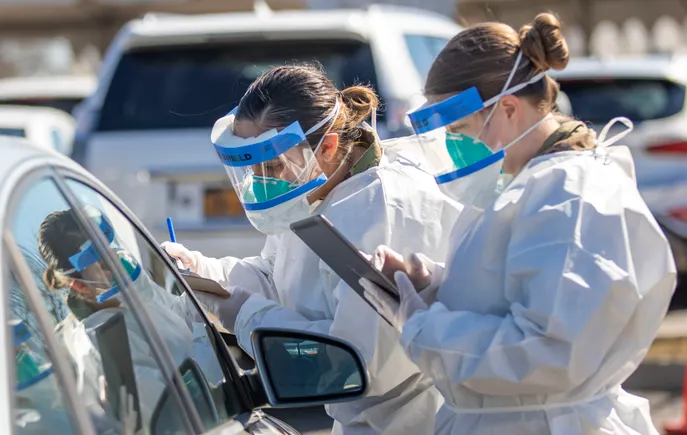
As states gradually reopen their economies and ease pandemic restrictions on businesses, employers are seeking safe and cost-effective ways to bring employees back to work through the summer and into the fall.
Although testing giantsLabCorpandQuestare marketing services to employers for testing active infections and antibodies, businesses do not appear eager to adopt them. Factors such as accuracy, logistics, and a lack of consistent federal guidance are giving employers pause.
According to employer groups interviewed by MedTech Dive, the vast majority of employers are taking a wait-and-see approach to such testing. A survey of more than 1,000 businesses released on June 2 by employment law firm Littler confirms this hesitation.
"There is uncertainty about testing and its accuracy and availability," Amber Clayton, director of the Knowledge Center at the Society for Human Resource Management, a professional HR membership association, told MedTech Dive. She noted the association has not yet issued related guidance.
She mentioned that molecular diagnostics can only record a specific point in time, and regarding antibody testing, "there is no clear research proving whether people who have been infected with COVID-19 can be reinfected."
LabCorp's return-to-work services include at-home molecular diagnostic collection kits and fingerstick antibody tests, as well as health questionnaires and temperature screening. Quest offers similar services, with the addition of telehealth and contact tracing.
One of Quest's early customers isDelta Air Lines, which last week planned to partner with the Mayo Clinic to begin testing employees for active coronavirus and antibodies. Delta's goal is to test all employees, which CEO Ed Bastian called a "comprehensive testing program" in a staff memo, describing it as a key step toward "beginning to resume normal operations."
Wendi Mader, executive director of Quest's employer population health program, told MedTech Dive that Quest is working with other airlines on molecular diagnostic and antibody testing, and mentioned interest from retail and manufacturing as well.
"Some employers will actually test on a weekly basis—these are high-touch employees, including flight attendants, pilots, and retail staff, especially in high-incidence areas," Jim Davis, executive vice president of Quest Diagnostics, said earlier this month at the Jefferies Virtual 2020 Healthcare Conference.
LabCorp told MedTech Dive it is working with a range of companies, but a spokesperson declined to list any current customers.
Both LabCorp and Quest saw overall testing volumes decline in the first quarter due to the widespread shutdown of non-emergency healthcare systems. LabCorp CEO Adam Schechter noted that even its near-term goal—100,000 molecular tests per day and more than 200,000 antibody tests—is only a small fraction of its roughly 530 million tests per year. Quest's CEO made similar comments.
Not a silver bullet
Littler's survey found that the vast majority of surveyed employers plan to use temperature checks (89%) and symptom screening (72%) as part of their return-to-work strategies. Only a minority said they would test employees for antibodies (8%), antigens (7%), and diagnostics (6%).
David Zieg, partner and clinical services leader at HR consulting firm Mercer, said that while evidence supports physical distancing to prevent COVID-19 transmission, "testing is not a silver bullet."
At the same time, he said, widespread employee testing combined with contact tracing "could be clinically reasonable and valuable in high-prevalence situations," such as in meat processing plants hard hit by the outbreak.
A recent survey of 44 large employers by the Business Group on Health pointed to inconsistent federal, state, and local guidance, as well as inconclusive data on testing effectiveness, as two of the top three challenges in reopening workplaces.
Kathleen O'Driscoll, vice president of the group, told MedTech Dive that there is a lot of "hype" surrounding antibody testing, and evidence on immunity for individuals who test positive for antibodies is not yet conclusive.
"Just because you test positive for antibodies doesn't mean you can be fully reassured," she said. "That's why viral testing is getting more attention right now."
Moreover, federal employment guidance actually discourages the widespread use of serology testing.
The U.S. Equal Employment Opportunity Commission's (EEOC) latest guidance on return-to-work actions states that diagnostic testing is permissible under the Americans with Disabilities Act (ADA) because infected employees may pose a direct threat to others in the workplace. But regarding serology testing, the agency said antibody tests for COVID-19 are not permitted under the ADA to decide whether an employee can return to work.
The EEOC stated: "Given the CDC's interim guidance that antibody test results 'should not be used to make decisions about returning persons to the workplace,' antibody tests currently do not meet the ADA's 'job-related and consistent with business necessity' standard for medical examinations or inquiries of current employees. Therefore, requiring antibody testing before allowing employees to re-enter the workplace is not permitted under the ADA."
Littler's report echoed similar concerns, saying that "even if a reliable antibody test eventually becomes available, employers may find it difficult to demonstrate that the test is 'job-related' (as required by the ADA), because healthy and fit-for-work employees who lack antibodies indicating possible immunity would not pass the test."
Quest's Mader observed that employers are currently most focused on molecular diagnostics that test for active viral infection to decide return-to-work strategies. "That is the employer's first priority." However, she believes "as the pandemic evolves, antibody testing will only prove to be more useful."
Mader predicts that as "science continues to advance," employers will eventually turn to antibody testing. She noted that early in the pandemic, serology tests had issues with "low quality," which "brought some negative impact to serology testing in the market." Mader believes this situation has been corrected.
Competitors quietly enter the fray
Despite these challenges, LabCorp and Quest face growing competition from health systems and technology companies that are entering the return-to-work services space.
ChristianaCare, one of the largest healthcare providers in the mid-Atlantic region, serving Delaware and parts of Pennsylvania, Maryland, and New Jersey, earlier this monthlauncheda telehealth employee COVID-19 symptom monitoring and testing program. Currently, 12 employers in Delaware are participating, with about 5,000 employees being monitored.
Alphabet's Verily last weekannouncedthe launch of its "Healthy at Work" program, combining symptom screening, testing services, and data analytics. The initiative follows Verily'sBaseline COVID-19 testing program, which has partnered with state and local public health departments to test more than 220,000 people across 13 states.
Potentially complicating employers' decision-making process is confusion over who pays for these tests. Although Congress has mandated that insurers cover the full cost with no out-of-pocket expenses for patients, there remains a lack of clarity on how and under what circumstances this applies to the largest self-insured companies.
Neither the Business Group on Health nor Littler surveys reported employer concerns about the cost of return-to-work testing services.
However, Quest Chief Financial Officer Mark Guinan said earlier this month at the virtual Jefferies Healthcare Conference that the company "understands the CARES Act requires these tests to be reimbursed—there is currently no frequency limit." Regarding payers, Guinan added, "We believe the legislation requires them to reimburse."
"Testing is not cheap, so employers have to consider that," Mercer's Zieg said, especially if test reimbursement becomes an issue.