
COVID-19 Testing Hits Bottlenecks: What's Next?
Six months after the U.S. declared a public health emergency, COVID-19 testing still faces severe challenges. Despite new testing products from companies like Abbott, BD, and Roche, and increased capacity at commercial laboratories, the weekly testing capacity of 4.5 million falls far short of the 30 million target recommended by the Rockefeller Foundation. Antigen testing is seen as key to expanding screening scale, but its sensitivity gap compared to PCR testing, backlogs at commercial laboratories, and federal funding shortfalls remain unresolved issues.
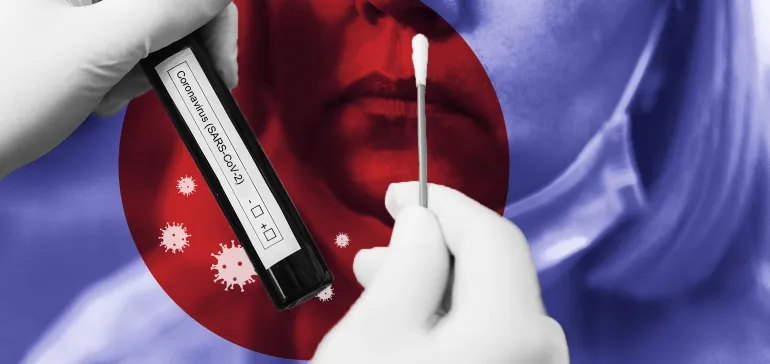
This article is part of a MedTech Dive series focusing on the impact of the COVID-19 pandemic on the medical device industry, published on the six-month anniversary of the U.S. declaration of a public health emergency. Other related reports can be foundhere。
When the U.S. declared a public health emergency for COVID-19 on the last day of January, the nation clearly lacked the diagnostic capacity needed to respond to this rapidly spreading infection.
Six months later, COVID-19 cases are surging in the southern and western U.S. Despite new testing products from companies like Abbott, BD, Roche, and Thermo Fisher, and increased capacity at commercial labs such as LabCorp and Quest, the nation can still only complete 4.5 million tests per week.
This falls far short of the 30 million tests per week that the Rockefeller Foundation says is needed to safely reopen and keep open community and state economies over the next three months. The foundation proposed a National Action Plan for COVID-19 Testing and Tracing this month to address this gap.
Echoing many public health experts, the plan's authors warn that the U.S. is losing the battle against COVID-19, and that testing is the only way to avoid further catastrophe until a vaccine or effective therapy is widely available.
To control the outbreak over the next three months, the Rockefeller Foundation authors argue, requires diagnostic testing for symptomatic Americans—at least 5 million tests per week with a turnaround time of no more than 48 hours—along with 25 million rapid, inexpensive screening tests for asymptomatic individuals.
The foundation argues the national focus should not only be on bringing more COVID-19 diagnostic tests to market, but also on significantly expanding point-of-care and home testing for asymptomatic people.
Abbott Labs' point-of-care platform ID Now was among the first molecular tests to receive FDA emergency use authorization. The company is also betting that large-scale rapid testing will be the next chapter in the pandemic response.
"As stay-at-home restrictions are phased out, we are entering a new phase where ongoing testing of symptomatic patients will begin to overlap with broader surveillance testing of asymptomatic patients to better track, understand, and control the spread of the virus until a vaccine is widely available," Abbott CEO Robert Ford told investors on a July 16 second-quarter earnings call.
Although the FDA has authorized more than 150 molecular tests, only two antigen tests, sold by BD and Quidel, have received emergency use authorization. Abbott is currently developing its own antigen test.
Unlike polymerase chain reaction (PCR) tests, which detect the virus's genetic material, antigen tests are designed to determine whether proteins from the surface of the novel coronavirus are present in a sample, yielding results in minutes rather than days.
Some public health experts advocate for a major push on antigen testing, especially as LabCorp and Quest struggle to meet surging demand for molecular diagnostics amid rising U.S. COVID-19 cases.
From slow and accurate to fast and good enough
Molecular tests are generally highly accurate and usually do not require repeat testing, while the FDA recommends that negative results from antigen tests be confirmed with a molecular test. The agency specifically warns that antigen tests cannot definitively rule out active COVID-19 infection.
"That's why the FDA attached a note when authorizing these tests: if the result is negative, it must be reconfirmed with a PCR test. And obviously most results are negative, so a lot of PCR tests are needed afterward," Roche Diagnostics CEO Thomas Schinecker told investors on a Thursday earnings call.
However, Mara Aspinall, a professor of biomedical diagnostics at Arizona State University's College of Health Solutions, noted that if the virus spreads faster than public health measures can respond, the U.S. will not be able to break the chain of transmission.
"We need to shift from a paradigm of 'extremely accurate but slow' testing to one of 'fast and good enough for isolation,'" she said. "Slow and accurate is fine for clinical management, but this virus is a sprinter, not a marathon runner. We need fast and frequent testing to keep up."
This approach has been endorsed by top U.S. health officials, including National Institutes of Health (NIH) Director Francis Collins and federal testing czar Brett Giroir.
Earlier this month, the FDA granted emergency use authorization to BD's rapid point-of-care COVID-19 antigen test, making it the second such diagnostic product approved by the regulator.
Quidel's product received the first emergency use authorization in the antigen test category in May and can deliver results in 15 minutes. BD's test runs on its widely used Veritor Plus system and also produces results in 15 minutes.
Quidel's antigen diagnostic appears to differ from BD's product in its accuracy. New data released by Quidel on July 17 showed its COVID-19 antigen test has a sensitivity of 96.7%, which the company says is comparable to that of PCR tests.
"Lower sensitivity has been a recurring argument against the use of antigen tests, and these data should help alleviate that concern," William Blair analysts wrote in a July 20 note to investors.
These analysts believe Quidel's latest antigen test data makes it "comparable to many molecular tests on the market" and "superior to the other antigen test on the market from BD."
In contrast, BD's antigen test has a sensitivity of 84%. When asked whether BD plans to update its clinical performance data, a spokesperson told MedTech Dive they were not aware of any such plans.
As for Abbott, CEO Ford declined to provide specific details on the timing and availability of its diagnostic product during the July 16 earnings call. But he said antigen tests offer an interesting value proposition compared to molecular tests. Ford emphasized that Abbott's goal is to produce an antigen test that is reliable, easy to use, and equally importantly, affordable.
"I think that's the key. If we want to achieve larger-scale screening and higher volumes of testing, these tests need to be more affordable, and one way to do that is to remove the dependence on lab instruments or make them instrument-free," he told investors.
In diagnostic testing, "simple, fast, cheap" is also the direction advocated by the Rockefeller Foundation, aiming to bring testing to the U.S. market at the national scale needed to effectively respond to the pandemic. The organization envisions point-of-care antigen tests costing $5 to $10 per test, with same-day results available at schools and workplaces, and even faster turnaround times for community mobile testing.
"Today, almost no such screening testing is happening nationwide, and we need at least 25 million tests per week to keep schools, healthcare facilities, and essential workers operating safely," Rockefeller Foundation President Rajiv Shah wrote in the organization's proposed national testing plan.
According to the Rockefeller Foundation, the U.S. needs at least an additional $75 billion in federal testing funds to achieve the plan's goal of 30 million tests per week by October, including at least 25 million rapid, low-cost antigen tests for asymptomatic Americans.
The call for more testing funds comes as Capitol Hill debates how much to allocate in the next COVID-19 relief bill. The Heroes Act, passed by House Democrats in May, provides an additional $75 billion for testing, but Senate Republicans are likely to propose their own legislation with a smaller amount.
Senate Republicans are considering a testing allocation far below that figure, while President Donald Trump has resisted increasing testing with the false claim that "more testing leads to more cases."
The Rockefeller Foundation also wants the government to invoke the Defense Production Act or similar federal programs to jumpstart the mass production and distribution of rapid, low-cost antigen tests. The government had previously, albeit reluctantly, used this Korean War-era law early in the pandemic to compel industry to produce ventilators.
LabCorp and Quest struggle to keep up with demand
Driven by surging demand for molecular diagnostic testing nationwide, especially in the South, Southwest, and West, current testing processing delays at the two largest commercial labs are hampering the U.S. pandemic response.
Quest reported on July 20 that non-priority patients are waiting an average of seven days or longer for test results, while "priority 1" patients—those who are severely ill—are waiting an average of more than two days. A company spokesperson told MedTech Dive that the company "plans to release updated data on Monday afternoon." "Otherwise, July data is the most recent," she said.
In contrast, LabCorp reported on Sunday that its average wait time for results is two to three days after sample collection, down from three to five days last week, with faster turnaround times for hospitalized patients.
Nevertheless, test result turnaround times exceeding 48 hours are rendering contact tracing ineffective. In fact, a study published in The Lancet on July 16 found that test results need to be delivered within one day of symptom onset for contact tracing to effectively reduce the spread of the novel coronavirus.
As LabCorp and Quest struggle to meet demand driven by hotspots in a timely manner, the Trump administration hopes rapid point-of-care tests from Abbott, BD, and Quidel can alleviate the pressure.
Federal testing czar Giroir has been touting the ability of BD and Quidel's antigen tests and Abbott's ID Now molecular test to deliver results in minutes outside of laboratory settings.
The testing czar acknowledged on Sunday that test results are taking too long. "The delays people talk about most come from the large commercial labs, which handle about half of the nation's testing," Giroir said on CNN's State of the Union, while estimating the average turnaround time at about 4.27 days. "I wish point-of-care testing were available everywhere. We're not there yet," he added.
NIH Director Collins echoed similar sentiments, saying current test result wait times are "too long" and that rapid antigen diagnostics could be the solution.
In an article published in the New England Journal of Medicine on Wednesday, Collins and his co-authors noted that while PCR tests are highly sensitive, they require significant laboratory space, complex equipment, regulatory approvals for lab operations, and skilled technicians to run. Additionally, they said such tests require shipping samples to central laboratories, which causes further delays.
"Therefore, low-complexity molecular point-of-care diagnostics with rapid turnaround times offer significant practical advantages," Collins and colleagues wrote, noting that antigen tests can provide rapid results "in a manner similar to how pregnancy tests operate." They mentioned that several manufacturers are currently developing such tests.
A Quest spokesperson told MedTech Dive that "molecular diagnostic testing still has its value." Meanwhile, they said the company "is exploring the possibility of launching its own antigen test," but declined to provide further details. LabCorp currently has no antigen testing plans, according to a company spokesperson.
Setting aside Quest's future antigen testing plans for now, the company is taking other approaches to maximize molecular testing capacity. On July 18, it announced that its PCR test (which first received FDA emergency use authorization in March) received emergency use authorization from the agency for sample pooling, a method designed to screen more people with fewer testing resources.
LabCorp announced on Saturday that it also received FDA emergency use authorization to use pooled testing methods for diagnostic testing of active COVID-19 infection in populations.
In the case of Quest's molecular test, sample pooling allows samples collected from four individuals to be combined into one "batch" and tested with a single test, rather than testing each separately. LabCorp's pooled testing method involves testing up to five samples at once.
Quest acknowledged the inherent limitations of sample pooling: it is only an efficient method when assessing areas or populations with low disease prevalence. Quest Chief Medical Officer Jay Wohlgemuth said in a statement that while sample pooling will help expand testing capacity, it is not a "silver bullet," and "as long as demand for COVID-19 testing surges beyond capacity, testing times will continue to be under pressure."
While LabCorp believes pooling can increase its overall testing capacity, the company acknowledged that due to reduced sensitivity, samples with low viral loads may not be detected in pooled samples, and that the method may be suitable for low-risk populations, when testing demand exceeds capacity, or during reagent shortages.
However, the Rockefeller Foundation argues that despite testing technology advances such as sample pooling, commercial labs "remain far from meeting the nation's screening testing needs."
The report says lab-based testing is "not convenient, simple, or cheap enough to be used at the scale needed," calling for increased antigen testing in places like schools and offices.
The Rockefeller Foundation also argues that the U.S. must look beyond already overwhelmed commercial labs like LabCorp and Quest, leveraging other underutilized laboratory resources and recruiting academic and other labs.
But time is of the essence, Shah said. "We will soon enter a new cold and flu season, with potentially up to 100 million influenza-like illness cases, which would overwhelm our current testing capacity."