
Boston Scientific exits Lotus program, further consolidating the duopoly in the TAVR market
Boston Scientific recently decided to terminate its Lotus Edge transcatheter aortic valve replacement (TAVR) program and recall unused devices. This move exits it from the rapidly growing market, which will be led by Medtronic and Edwards Lifesciences for the coming years. Experts project the global TAVR market will double to approximately $10 billion by 2025.
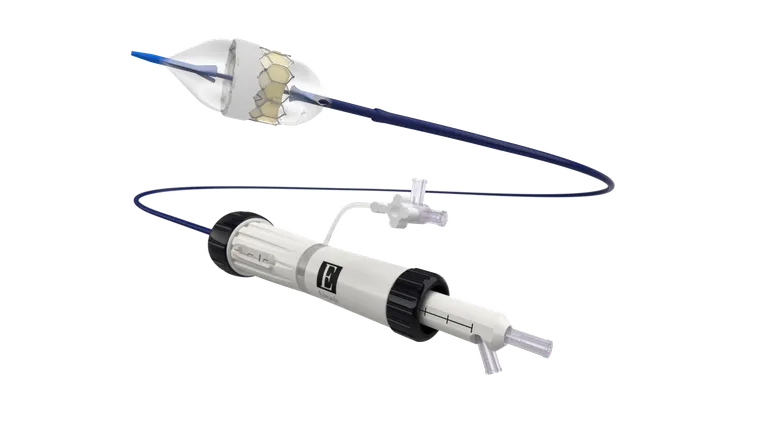
Boston Scientific recently announcedthe termination ofits Lotus Edge transcatheter aortic valve replacement (TAVR) program, a decision that removes the company from a rapidly growing market. Experts expect the global market to grow at a double-digit annual rate through the mid-2020s.
This move means that for the next several years, Medtronic and Edwards Lifesciences will be the two main competitors in this field.
"These two major competitors have been operating in the market for about eight years, and now they will enjoy a duopoly for several more years," said Raj Denhoy, equity analyst at Jefferies.
Boston Scientific announced in November that it would retire the product and recall all unused devices due to complications with its delivery mechanism, continuing the program'stroubled history。
Denhoy noted that this decision will leave approximately $125 million to $130 million in revenue in 2021 up for grabs, and Medtronic is likely to capture the majority of it given the similarity of its product to Boston Scientific's.
However, filling the void left by Lotus is unlikely to provide a significant advantage to either company, as Lotus was more of a niche product for a specific patient population. Any market share gains are more likely to come from the industry's rapid growth.
According to a November study in the Journal of the American College of Cardiologyresearch, TAVR procedures became the dominant form of aortic valve replacement in the U.S. in 2019, surpassing surgery by more than 15,300 cases.
Jefferies forecasts the global TAVR market will grow from approximately $5 billion in 2020 to $10 billion by 2025. Scott Tuhy, senior vice president at Moody's Investors Service, expects slightly lower growth but still predicts the market will nearly double from about $4 billion in 2019 to $7 billion by 2024.
Although other competitors such as Abbott Laboratories with its Portico product are trying to capitalize on the rise of TAVR, Tuhy believes the market remains underpenetrated, leaving Edwards and Medtronic ample room to sustain growth.
"Even if other products enter the field, the market is growing so significantly that they can continue to grow by expanding indication labels, bringing more patients into the treatment pathway, and training more surgeons globally to perform these procedures," Tuhy said.
According to Denhoy, the U.S. TAVR market is currently led by Edwards with a share of about 65% to 35%; the European market is roughly split, about 45% to 45%.
"It's a healthy competition between the two," Denhoy said. "Edwards is ahead right now, but Medtronic is clearly not going to give up."
Medtronic has been public about its ambition to expand its TAVR market share. Michael Coyle, president of the company's cardiovascular portfolio, said last week that Medtronic plans to capture a significant share of the Lotus business and further expand its market presence.
"We have an opportunity to gain share, not only from Boston Scientific, but we feel we can gradually take it from Edwards as well," Coyle said at the Piper Sandler virtual healthcare conference. "So we're fairly optimistic about our share capture opportunities going forward."
Joseph Cleveland, a cardiac surgeon at the University of Colorado Anschutz Medical Campus, said his center only uses Medtronic or Edwards valves because they "failed to see the real value of Lotus." Patients are evaluated on a case-by-case basis, with two-thirds to three-quarters receiving Edwards valves and the rest receiving Medtronic valves.
Cleveland, who is also a researcher in thehead-to-head trialof Medtronic and Edwards' Sapien valve, said that although he performs more procedures with Edwards valves due to training reasons, Medtronic is "slowly" catching up.
A higher bar for Acurate?
Beyond exiting a growing market, Boston Scientific's withdrawal of Lotus could also have a ripple effect among surgeons, making them cautious about the company's other TAVR products.
The company expects to launch the Acurate neo2 aortic valve system in the U.S. in 2024, a date that has been pushed back from 2021 as the product has also faced setbacks. However, according to Cleveland, any new product from Boston Scientific must be "more transformative than an iterative step."
"I think this sets a higher bar for them, not just to return to the surgical community, but to the entire TAVR community," Cleveland said. "They need to truly demonstrate the ability to reach new patient populations or significantly reduce current major complications."
As for the competition narrowing to two companies, Cleveland said valve prices (both companies charge around $30,000) are unlikely to change.
Vinod Thourani, director of cardiovascular surgery at Piedmont Healthcare and the Marcus Heart Valve Center, pushed back on the notion that the Lotus decision would harm surgeon relationships or confidence in Boston Scientific's future TAVR products.
"In the surgical and valve disease field, we've seen products that should have been pulled from the market but never were," Thourani said. "So, I think we respect Boston Scientific for this decision."
Thourani added that Boston Scientific has not completely lost touch with cardiologists and surgeons because its Acurate trial is still ongoing.
Boston Scientific CEO Mike Mahoney recently said that terminating the Lotus program allows the company to redirect resources from niche products to other options like Acurate neo2.
"The time, cost, and investment required to make Lotus a workhorse valve—and thereby gain greater market share—did not make sense compared to the company's other options," Mahoney said at the Evercore ISI virtual healthcare conference on December 1.
However, as Medtronic and Edwards further consolidate their positions, catching up to them will become more difficult.
"The longer this market continues to operate, the harder it will be for latecomers to catch up," said Denhoy of Jefferies.