
Mitral Valve Market Expected to Rival TAVR, Abbott and Edwards Compete for Position
Transcatheter aortic valve replacement (TAVR) has dominated the structural heart disease market in recent years, but the industry is shifting focus toward mitral valve intervention. Analysts expect the mitral and tricuspid valve market to reach $3 billion by 2025, with mitral valves accounting for the majority. Abbott leads with MitraClip, while Edwards is catching up with its Pascal system, but faces challenges of technical complexity and clinical data.
Transcatheter aortic valve replacement (TAVR) has dominated the structural heart field in recent years, with a current market size of approximately $5 billion, and this procedure has become the primary form of aortic valve replacement in the United States.primary form。
Entering 2021 and beyond, the industry is targeting new heart valve opportunities with a potential scale several times that of the TAVR market: transcatheter mitral valve replacement and repair.
The mitral valve market often remains in the shadow of the aortic valve market, but its potential patient population is larger. Companies with successful structural heart businesses, such as Abbott Laboratories and Edwards Lifesciences, have already taken leading positions in the early stages of this market.
Analysts and the industry agree that the mitral valve market, along with the subsequent tricuspid valve market, will reach $3 billion by 2025, with the mitral valve accounting for the vast majority of this forecast.
Mitral regurgitation (MR) refers to the backflow of blood into the heart's atrium. MR is the most common valvular disease, affecting approximately 2% of the global population,according todata from the National Center for Biotechnology Information.
Alongside the large patient population, the treatment rate is lower compared to aortic stenosis. According to Edwards data, only 2% of patients needing mitral valve intervention undergo surgical or transcatheter treatment, whereas 10%-12% of patients needing aortic intervention receive TAVR.
It is this large and underpenetrated patient base that leads analysts and the industry to believe the field can achieve the 2025 forecast and continue to grow significantly thereafter.
Jefferies equity analyst Raj Denhoy said he estimates the current market size at approximately $800 million, which could grow by multiples of the 2025 forecast in the future. Denhoy added that the mitral valve market could eventually grow to several times the size of the TAVR market, which he expects to approach $10 billion by 2025.
"This is truly one of the next major opportunities," Denhoy said. "I mean, it's already a huge opportunity—$800 million—but it will continue to grow for a long time."
This year, the mitral valve field has already seenpositive developments. The Centers for Medicare & Medicaid Services (CMS) last week expanded coverage of transcatheter edge-to-edge repair for patients with secondary mitral regurgitation, which could more than double the number of eligible U.S. patients compared to previous coverage rules.
As companies shift focus to the mitral valve, cardiac surgeons have observed an increase in procedure volumes.
Joseph Cleveland, a cardiac surgeon at the University of Colorado Anschutz Medical Campus, said that after previously being cautious about transcatheter mitral valve repair, general cardiologists are increasingly referring patients for the procedure.
Matthew Romano, director of the Mitral Valve Clinic at the University of Michigan, similarly said that mitral valve procedures are increasing and will continue to grow in the coming years because "current technology offers a treatment option for patients who may not be suitable for surgery, potentially reducing their mortality risk and improving quality of life."
Similar to TAVR procedures, transcatheter mitral valve procedures offer patients a minimally invasive alternative to open-heart surgery.
Romano, who has been involved in Edwards and Abbott mitral valve device trials, said that even with growing procedure volumes and an expanding potential patient base, open-heart surgery remains the "gold standard," and the challenge for transcatheter procedures will be producing similar outcomes.
Abbott vs. Edwards
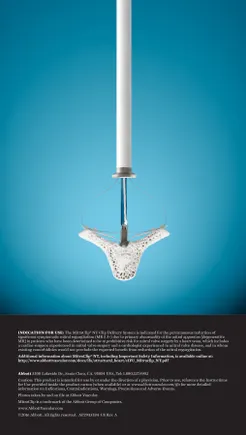
Currently, Abbott is the clear leader in the mitral valve market. A version of its mitral valve repair device, MitraClip, has been available in Europe since 2008 and in the U.S. since 2013; it remains the only approved transcatheter mitral valve repair device in the U.S.
The product has become the primary driver in Abbott's structural heart portfolio. According to JPMorgan data, MitraClip generated approximately $690 million in sales in 2019, with an estimated $670 million expected in 2020. Abbott's entire structural heart business generated approximately$1.4 billionin revenue in 2019 and maintainedsimilar momentum。
Neil Moat, Chief Medical Officer of Abbott's structural heart business, said the growth opportunity in the mitral valve is not only because the number of patients with mitral valve disease exceeds those with aortic stenosis, but also because patients are often undertreated.
"Even before the TAVR era... the penetration rate of treatment for mitral valve disease was far lower than for aortic valve disease," Moat said, adding that as the global population ages, the potential patient pool will only continue to grow.
According to Moat, more than 100,000 patients have been treated with MitraClip to date, and the company has launched MitraClip G4 in Europe and the U.S., while developing fifth and sixth generation products.
As the market grows, Abbott's leading position in the field may not be guaranteed. Edwards, following the success of its TAVR business, is launching its own transcatheter mitral valve repair system, Pascal, and has listed this market as a key priority.
In a recent JPMorgan presentation, CEO Michael Mussallem highlighted the mitral and tricuspid valve opportunities, which together constitute Edwards' overall market forecast of $3 billion by 2025. The company is conducting three clinical trials for the Pascal device: two for mitral valve repair and one for the tricuspid valve.
Bernard Zovighian, corporate vice president of Edwards' transcatheter mitral and tricuspid therapies business, said the launch of Pascal in Europe is progressing well, with the product available in more than 10 countries. However, Edwards expects U.S. approval of Pascal not until the end of 2022, so product launch and revenue contribution will be delayed until 2023.
Despite Abbott's lead, Zovighian said there is still a huge opportunity in the mitral valve because MitraClip has only been studied in a small fraction of the potential patient population. While Zovighian declined to give specific long-term forecasts, he said Edwards expects the market to be "significantly larger" after 2025.
"Hopeful, with huge patient need. But there is still much work to be done to ensure the mitral valve becomes a large market," Zovighian said. "I am very confident it will happen."
Although both Abbott and Edwards have developed tricuspid valve products—Edwards' Pascal and Abbott's TriClip device based on MitraClip design—Cleveland questioned whether the tricuspid valve market can take off unless devices specifically designed for that valve are developed.
Potential Barriers to Growth
Both Moat and Zovighian stated that the complexity of the disease requires a broader portfolio of devices to properly treat patients, and both companies are developing transcatheter valve replacement devices as well as repair devices. However, Cleveland said that due to the complexity of the mitral valve, the replacement market and treatment are improving but remain in the "nascent stage."
According to Romano, handling the anatomical features of the mitral valve and reaching the valve are both more challenging than in aortic procedures. Additionally, once the valve is reached, the device must be placed and secured, which can be more difficult than with the stiffer, calcified aortic valve.
Both surgeons stated that the complexity of the valve, compared to the aortic valve, has also led to slower market development and may pose challenges for device development. These challenges could also become barriers to the widespread adoption and use of mitral valve devices and procedures, compared to the adoption rate of TAVR.
However, Cleveland said that improvements in device technology and other areas such as cardiac electronic imaging are rapidly catching up to the complexity of the valve, making the procedure easier for surgeons.
"I'm always cautiously optimistic about technology. I never bet against it," Cleveland said, "because it seems that a group of smart engineers with enough venture capital can overcome almost anything."
Prioritizing the Mitral Valve Field
Analysts believe that Edwards can become a worthy competitor to Abbott and gain market share in the coming years, but Abbott's lead remains significant.
While analysts expect MitraClip sales to continue their performance of nearly $700 million over the past years, Edwardsforecaststhat global sales of transcatheter mitral and tricuspid therapies will double to approximately $80 million in 2021.
However, Edwards' catch-up may come from the surgeon relationships it has built through its TAVR business, as well as the advantage of being a new option for surgeons, Cleveland said.
Evercore analyst Vijay Kumar said Edwards' success will depend on reliable clinical data from its ongoing repair and replacement device trials.
Even with reliable results, Edwards' timeline may make it difficult to catch up with Abbott in the near term. According to Kumar, if the mitral valve market reaches the 2025 forecast, Abbott would capture approximately $2 billion and Edwards approximately $500 million.
Abbott's first-mover advantage may also become apparent soon. CMS's recent expansion of reimbursement for secondary MR could double or triple MitraClip's U.S. patient base. Meanwhile, Edwards is still seeking U.S. approval for Pascal.
Medtronic and Boston Scientific are also developing transcatheter mitral valve products, but according to Kumar, these products are still three to four years away from market.
This gap leaves Edwards and Abbott to compete for market share alone in the foreseeable future, which could be strategically critical for both companies.
"For Edwards, (the mitral valve market) is crucial because it is the next chapter in the company's story," said Jefferies' Denhoy. "For Abbott, it has been one of the growth drivers over the past few years, so they are also highly focused on it."