
Four Key Antitrust Issues in the Healthcare Industry: Analysis of Federal and State Regulatory Trends
Over the past year, antitrust enforcement activities in the U.S. healthcare industry have been frequent, with the Federal Trade Commission (FTC) planning to strengthen enforcement and state legislatures considering enhanced scrutiny of mergers. This article outlines four major antitrust topics to watch in the future, including the FTC's expansion of enforcement tools, the impact of the Becerra nomination, the ripple effects of the Sutter settlement, and legislative developments at the state level.
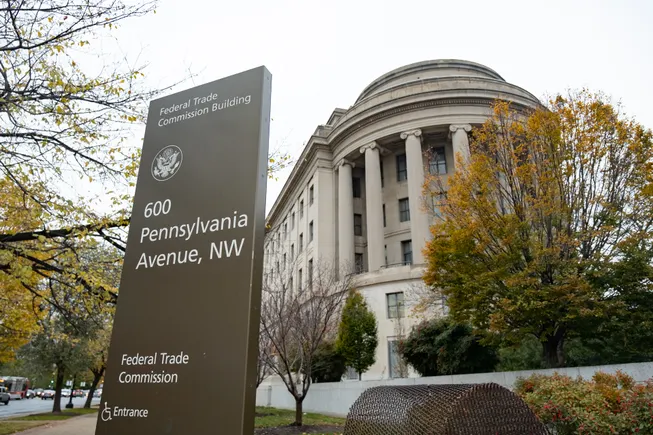
Over the past year, antitrust enforcement activities in the U.S. healthcare industry have been frequent, and their impact may extend into the near and even more distant future. Legal experts told Healthcare Dive that the Federal Trade Commission (FTC) is expected to take more aggressive enforcement actions against anticompetitive transactions in the coming years, while state legislatures are also considering strengthening scrutiny of mergers and acquisitions within their states.
The FTC announced last year the expansion of a program to assist it in overseeing future and completed transactions. Just last year, the agency challenged a hospital merger for the first time after a three-year lull.
The FTC sought to block a hospital merger in Philadelphia, namely Jefferson Health's proposed acquisition of Albert Einstein Healthcare Network. The FTC previously told Healthcare Dive that its last block of such a deal was in 2017, when Sanford Health attempted to acquire Mid Dakota Clinic. However, after a court rejected its request to block the Jefferson Health deal, the FTC confirmed in its case brief on Monday that it would no longer seek to block the transaction.
In this context, Biden's nominee to lead the nation's top health regulatory agency, Xavier Becerra, could also be a factor. During his Senate hearing last week, he told the health committee that he would continue to pursue the crackdown on anticompetitive behavior and healthcare providers that "unfairly raise prices" that he carried out during his tenure as California's Attorney General.
FTC seeks to expand enforcement tools
The FTC has been exploring various avenues to expand its tools for reviewing mergers. Last year, the FTC said it would strengthen a key tool to assist in overseeing anticompetitive transactions. Some legal experts say the move to expand its retrospective merger review program signals that the agency will become more aggressive in reviewing deals.
Rani Habash, a partner at Dechert, noted that the FTC's past reviews of healthcare mergers were relatively rigid, primarily assessing competition in the same geographic market and the same service area. But he predicts that the FTC may shift its attention to adjacent markets and the impact of mergers on them in the future.
"They are trying to develop potential new theories of harm," Habash said. "The concern is that you might use your power in an area where there is no competition to obtain higher rates in another area where competition is more intense."
The agency is also beginning to measure the impact of physician consolidation and has requested data from the largest U.S. insurers to study the issue more closely. This comes amid concerns about excessive concentration in healthcare provider markets nationwide.
Additionally, last year the agency began a study of "Certificates of Public Advantage," laws passed by state legislatures designed to shield mergers from federal antitrust enforcement.
For the industry, closely monitoring the outcomes of merger reviews will be very important, especially as insurers begin to comply with these orders and submit relevant information.
Becerra's antitrust perspective in rulemaking
As California's Attorney General, Becerra reached a $575 million antitrust settlement in a case against Sutter Health, a dominant Northern California healthcare system.
Given his track record in California, there has been much speculation about the impact his nomination could have on antitrust enforcement. Some legal experts say that although the Department of Health and Human Services (HHS) has no jurisdiction over mergers, if his nomination is confirmed, he may be sensitive to the competitive effects of any rules issued by the agencies he oversees.
For some, Becerra's potential focus on antitrust would be a welcome change. "When I look at certain regulations, sometimes they seem to me to be either anticompetitive because they may raise barriers to entry, or they actually increase the prices people charge," Habash said.
Tim Greaney, an antitrust expert and professor at UC Hastings, agreed, noting that previous HHS policies sometimes encouraged consolidation. He cited site-of-service policies, which allow hospital-owned centers to receive higher Medicare reimbursements than independent physician groups. Ultimately, this incentivized hospitals to acquire physician practices to obtain higher payments.
Ripple effects of the Sutter settlement
The Sutter settlement in California could trigger stricter scrutiny of dominant healthcare providers in other parts of the United States. The settlement resolved allegations that the largest health system in Northern California raised prices through anticompetitive conduct. Some legal experts believe this could incentivize other private groups to file lawsuits.
"This could spur more private litigation because remember, the Sutter case was originally brought and settled by a grocery workers' union," Greaney said, noting that many U.S. markets have dominant health systems. Nevertheless, he cautioned that such cases are time-consuming and an uphill battle for state attorneys general with fewer resources. Greaney said he has been focused on what state legislatures can do to limit market power, which may be more effective and faster than litigation.
According to a motion in the case, the Sutter case produced 16.9 million pages of documents over 30 months, involving more than 160 parties, detailing an extraordinary discovery process.
"Particularly with increasing attention on the unilateral conduct of high-tech industry players, federal and state regulators are expected to continue focusing on the competitive effects of the conduct of 'dominant' local and regional health systems," Jim Burns, a partner at Akerman, said recently in a post highlighting potential antitrust activity in 2021.
State-level activity
Healthcare transactions may soon also face stricter scrutiny at the state level. Some state legislatures have considered bills requiring merging entities to provide prior notice to the state before completing a merger. Although certain transactions may require alerting federal regulators, states may be left out of the process. This could leave them blind to local market dynamics, leading over time to overly consolidated markets in certain specialties.
California considered a bill last year that would have required the state Attorney General to approve most healthcare transactions before a change in control, not just hospitals. The bill failed to pass both chambers. The bill would have required health systems, private equity groups, or hedge funds to notify and obtain consent from the Attorney General before any transaction was completed.
According to Burns, who is closely following the matter, Indiana and Florida are also considering similar measures. "The trend of state legislatures proposing and passing pre-merger licensing laws will continue," said Jonathan Grossman, co-chair of the antitrust practice at Cozen O'Connor.