
From Lab to Home: The Evolution of COVID-19 Testing in 2021
As the pandemic enters its second year, the COVID-19 testing landscape in the United States is undergoing profound adjustments: testing volumes have notably fallen from their January peak, while manufacturers such as Abbott and Quidel continue to expand production capacity; the FDA has accelerated approvals for at-home and OTC testing products, but concerns over cost and public health visibility have sparked debate; the potential impact of variants on molecular testing is also drawing regulatory attention.
This article is part of MedTech Dive's 'Pandemic One Year Later' series, which examines the impact of the COVID-19 pandemic on the medical device industry. For other related coverage, clickhereto view.
One year after the outbreak of the pandemic, the fight against the coronavirus in the United States appears to have entered a new phase, with vaccination gradually replacing testing as a priority.
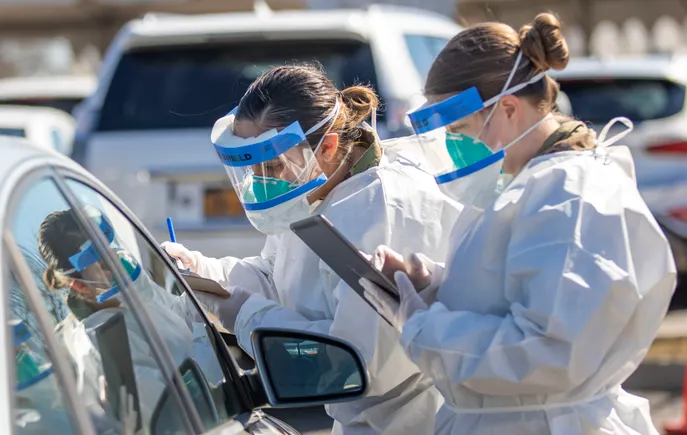
According to data from the Johns Hopkins University Coronavirus Resource Center, as COVID-19 vaccines have been rolled out nationwide, the number of Americans getting tested has declined significantly since January.
In January, laboratories and other testing sites completed an average of nearly 1.9 million tests per day, while the daily average dropped to 1.5 million in February and further to 1.3 million in early March.
'One factor we are facing right now is a decline in testing, partly because testing efforts in some public health jurisdictions are being replaced by vaccination,' said Dr. Mary Hayden, chief of the Division of Infectious Diseases at Rush University Medical Center. Hayden believes public health departments do not have enough manpower and resources to conduct large-scale testing and vaccination simultaneously, so they are focusing on the latter.
The decline in testing has already negatively impacted at least one diagnostic manufacturer, and other companies will undoubtedly face similar situations as they tally and report first-quarter results.
Quidel last week lowered its 2021 revenue guidance from $2.9 billion to approximately $2.5 billion, as the company had to contend with a 'plunge' in U.S. demand for COVID-19 testing in the first quarter. CEO Doug Bryant delivered the bad news during a virtual Barclays Global Healthcare Conference, stating that testing demand in February and March fell 30% to 40% compared to the fourth quarter.
'We did not see the sustained demand for symptomatic testing that we saw in the fourth quarter,' Bryant said at the Barclays conference. 'Fewer people are getting tested because they have symptoms.'
However, public health experts warn that widespread COVID-19 testing remains crucial for tracking and preventing the spread of the virus, including screening both symptomatic and asymptomatic patients, as well as detecting new variants and their impact on vaccines and immunity.
'If we don't test, we won't know how many infections exist,' Hayden said. 'Although infection rates are much lower, they are still high. In many places, infection rates are higher than in the summer. We are still seeing a lot of infections, and now is not the time to relax the overall strategy and reduce testing.'
Whether COVID-19 testing will return to earlier levels—especially after vaccines are more widely distributed—remains an open question. Nevertheless, both Abbott Laboratories and Quidel are ramping up production capacity for testing kits.
Abbott reported in late January that fourth-quarter diagnostic sales rose 110% year-over-year, driven by demand for rapid antigen tests and PCR-based COVID-19 tests. At the time, CEO Robert Ford told investors that despite the rollout of COVID-19 vaccines, he believed testing demand in 2021 had 'sustainability.' However, that was nearly two months before the significant decline in U.S. testing volumes.
Nevertheless, Quidel's Bryant said he expects 'significant demand' for COVID-19 testing starting in the second quarter, and the company is continuing to develop an over-the-counter home antigen test, which analysts see as a first step toward a consumer-focused diagnostics business.
The rise of home testing
The FDA set COVID-19 testing priorities in early 2021, focusing on home testing. Tim Stenzel, director of the FDA's Office of In Vitro Diagnostics and Radiological Health, told test developers in January that the agency is particularly interested in home tests and home collection kits, as well as point-of-care tests and tests that can be performed at 'very high throughput' in central laboratories.
The agency subsequently quickly granted emergency use authorizations for home testing products. In the recent phase of the pandemic, the number of home diagnostic products has grown, but most kits test for antigens and require a prescription.
However, the FDA on Tuesday issued a new supplemental template for developers seeking EUA for specific tests involving serial testing, which involves testing the same person multiple times over several days. In a joint statement, Jeff Shuren, director of the FDA's Center for Devices and Radiological Health, and Stenzel noted that home tests could be authorized for over-the-counter use without prior validation of their effectiveness in asymptomatic individuals.
'The FDA believes that evidence of strong test performance in symptomatic patients, combined with serial testing, can mitigate the risk of false results when testing asymptomatic individuals,' Shuren and Stenzel said.
As of Tuesday, the FDA had granted EUAs for one molecular prescription home test, two antigen prescription home tests, one over-the-counter home antigen test, and one over-the-counter molecular test, in addition to 38 molecular test authorizations that allow for home sample collection.
The FDA in November granted Lucira Health the first EUA for a COVID-19 diagnostic test that can be fully self-administered at home. Lucira's single-use molecular test kit is authorized for prescription home use.
Australia's Ellume in December became the first over-the-counter COVID-19 self-test to receive an EUA. The Department of Defense, in coordination with the Department of Health and Human Services, awarded Ellume $231.8 million last month to expand U.S. production of its rapid antigen home test.
The FDA earlier this month granted an EUA for Quidel's QuickVue home COVID-19 test, which brings lateral flow technology used by medical professionals for decades to the public, although initially limited to prescription use.
Several other companies, including Abbott, also sell fully home-based COVID-19 tests that do not require sending samples to a laboratory. Abbott's antigen-based BinaxNOW COVID-19 Antigen Card home test, which requires a prescription, was the first home, virtually guided COVID-19 diagnostic product approved by the agency.
The FDA earlier this month also authorized the first over-the-counter home molecular COVID-19 test. Cue Health is the only company to receive an EUA for over-the-counter use of a molecular nucleic acid amplification test.
However, Romney Humphries, medical director of the Clinical Microbiology Laboratory at Vanderbilt University Medical Center, warned that as home testing (whether via antigen or other methods) becomes more widespread and used by consumers, one concern is that it could reduce the visibility of test results to public health departments.
Humphries and other critics also argue that cost is a potential challenge for home COVID-19 tests coming to market, with each test costing around $25 or more. She added, 'The populations most affected by COVID-19 are precisely those least able to afford this cost.'
Abbott's $25 test and service fee is currently the lowest among home tests. Ellume's test is expected to cost about $30 per test, while Lucira expects its test kit to be priced at around $50 per test.
To address this issue, a study led by the Yale School of Public Health and published last week in the Annals of Internal Medicine found that mailing a pack of rapid home COVID-19 antigen tests to every U.S. household and asking people to use them weekly could substantially reduce total infections and deaths, at a cost that is 'reasonable' for taxpayers.
The study found that providing weekly testing over a 60-day period would avert 2.8 million infections and 15,700 deaths in the U.S., with an incremental cost of about $68 per person, including $38 for testing, $32 for lost productivity on additional workdays, and $2 in savings from reduced hospitalizations. According to the study authors, this equates to a cost-effectiveness ratio of $1.43 million per death averted.
However, free home testing is not currently included in the Biden administration's expanded COVID-19 testing plan released last month, nor in the just-passed American Rescue Plan Act of 2021, which includes nearly $48 billion specifically for testing and contact tracing.
Such home self-tests also present inherent challenges. Hayden and Humphries, along with other experts from the Infectious Diseases Society of America, co-authored a March 2 editorial warning that home self-testing depends on consumers correctly following instructions, ensuring kits are not expired, and understanding the limitations of negative and positive results. The IDSA editorial specifically noted that very low community prevalence would lead to higher false-positive rates.
Nevertheless, David Paltiel, a Yale School of Public Health professor, argues that despite potential issues with adherence and false negatives and positives in home testing, 'don't let perfect be the enemy of good.' Paltiel believes home antigen testing 'can save millions of infections and thousands of lives at a reasonable cost.'
Impact of variants on testing
Molecular diagnostics and antigen tests used to detect COVID-19 infection, as well as serology tests used to detect antibodies and potential immunity, remain critical to public health efforts to contain the spread of the coronavirus—especially as the virus mutates.
The FDA reminded clinical laboratory staff and healthcare providers in January that the U.K. COVID-19 variant and other emerging viral forms could affect the performance of certain PCR tests. Diagnostic products made by Applied DNA Sciences, Mesa Biotech, and Thermo Fisher Scientific could be affected by variants, but the FDA said at the time that 'the impact does not appear to be significant.'
The agency also issued guidance late last month on evaluating the impact of mutations on COVID-19 tests, as new strains could alter the accuracy of diagnostic products, including the potential for false negatives. Abbott, Becton Dickinson, and other diagnostic manufacturers said they are monitoring new viral variants and testing the effectiveness and accuracy of their products.
Meanwhile, Thermo Fisher, Roche, and PerkinElmer have all expanded their SARS-CoV-2 assays in recent weeks to help laboratories identify mutations associated with rapidly emerging variants.
Laboratory giant Quest Diagnostics recently also launched a semi-quantitative serology test service to measure antibody levels in previously infected individuals and vaccine recipients. In the U.K., a diagnostic industry coalition, after studying immune responses in vaccinated individuals, is pushing for antibody testing to play a greater role in immunization campaigns, including before and after vaccination.
However, the U.S. Centers for Disease Control and Prevention has not yet recommended the use of antibody testing to assess the effectiveness of COVID-19 vaccines or the need for vaccination.
The FDA's Stenzel has issued warnings regarding COVID-19 vaccines and the use of the agency's authorized antibody tests to determine immunity in vaccinated individuals. According to Stenzel, the FDA has not authorized any serology test for vaccine-related purposes, whether to determine the need for vaccination or to determine whether a vaccine has taken effect and provided some immunity.
'I think it's a bit dangerous to do that right now,' Stenzel said.