
Hybrid Care Model: The Digital Integration Path of Healthcare Services in the Post-Pandemic Era
Although the pandemic significantly boosted telemedicine adoption, the usage of purely virtual care has declined as COVID-19 cases in the U.S. decreased. However, at the HIMSS annual healthcare conference, experts stated that telemedicine is increasingly being incorporated into hospitals' digital roadmaps, with some institutions even increasing investment despite slowing visit volumes. This brings hope to proponents of the hybrid care model, who emphasize flexibly selecting service delivery methods based on patient needs to reduce costs and improve outcomes.
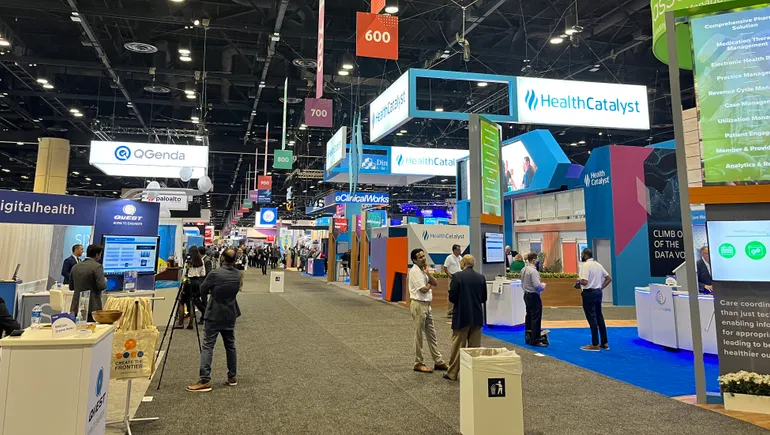
Although the pandemic greatly promoted the use of telehealth, usage of pure virtual care has declined as COVID-19 cases in the U.S. have decreased. However, at the HIMSS annual healthcare conference, experts noted that telehealth is increasingly being incorporated into hospitals' digital roadmaps, with some organizations even increasing investment in the model even as visit volumes have leveled off.
This brings hope to proponents of the hybrid care model. They emphasize that providing care where patients are located helps reduce costs and improve health outcomes.
Before the pandemic, telehealth usage was relatively low, accounting for less than 1% of outpatient visits by one measure. However, during the peak period from March to August 2020, telehealth accounted for 13% of outpatient visits, before declining to about 8% during the same period the following year.
Despite fluctuations in consumer usage, "the genie is out of the bottle. We have to keep moving forward with telehealth," said Donna Roach, chief information officer at University of Utah Health.
Video conferencing giant Zoom saw a surge in telehealth business during the pandemic. A survey it conducted with Qualtrics found that 61% of those who used virtual care during the pandemic said they would prefer a mix of digital and in-person healthcare in the future.
"The overall hyper-digitization of healthcare and the virtualization of medical services has been quite significant," Ron Emerson, Zoom's global head of healthcare, told Healthcare Dive at HIMSS. "What we're seeing is post-COVID—I won't say post-COVID, but as we go through different phases of COVID, telehealth and virtual care remain a persistent care delivery model."
Hybrid care models—applied where appropriate
In-person care will never completely disappear. Certain medical services, such as surgery, must be provided face-to-face. Even in areas like primary care—where telehealth advocates have pointed out that nearly the entire experience could be digitized through wearables, health coaching, and artificial intelligence—in-person touchpoints will remain.
The simple fact is that some patients need virtual care and some do not, said Lani Ketalpal, head of value-based care partnerships at CVS Health.
So, "how do we treat that particular patient? Through what modality do we reach that patient?" and how care teams can use digital and in-person pathways to meet their health needs and personal preferences, Ketalpal asked.
Experts say these hybrid models can best improve care and reduce costs in the inpatient setting.
Research shows that hospitalization is one of the most expensive types of healthcare utilization, and hospital costs have continued to rise year over year.
"For certain patients, in-person visits with a physician will always play a critical role," Chris McCann, CEO of Current Health, a home care technology platform, told Healthcare Dive. "There is tremendous value in touching the patient. But it's entirely reasonable to think that some portion of care currently provided does not need to be delivered in an inpatient facility."
In an ideal world, experts say, healthcare providers should be able to determine how a patient receives care based on that specific patient's needs. Hybrid models, such as hospital-at-home care, will become more prevalent, using technology to coordinate care and requiring inclusion and exclusion criteria to ensure patients receive the type of care best suited to their situation.
"Let the level of interaction required by the specific situation determine what kind of care should be provided, given the correlation between accessibility and quality," said Zoom's Ron Emerson. "First, clinicians and patients have become accustomed to technology, and we're in a more consumer-driven world. I think meeting consumers where they are has become a fact."
This also aligns with the shift toward value-based care. If providers have a set amount of funding to care for a specific population, rather than being paid per visit, they can use the most effective care delivery methods based on that population's clinical performance.
Emerson said this makes programs operating under capitation or other value-based models the "low-hanging fruit" for hybrid models in the near term, including accountable care organizations, payer-provider organizations, self-insured employers, and Medicare Advantage plans.
But even in fee-for-service systems, hybrid models should save costs by reducing the number of in-person consultations and by increasing access to care to prevent more serious—and more expensive—consequences in the future. Experts say this can have a particularly significant impact among the small number of high-need patients who consume the majority of healthcare resources.
Some worry that if virtual visits are added on top of in-person services rather than replacing them, the broader availability of telehealth could actually increase system costs. Early research results have been mixed, with telehealth proving cost-saving in some cases and cost-increasing in others.
But some evidence, even predating the COVID-19 pandemic, points to the effectiveness of virtual care in diverting patients from more expensive care settings.
Data from Jefferson Health in Philadelphia in 2019 showed that using a telehealth platform to prevent unnecessary emergency department visits saved providers about $1,500 per visit. And hybrid models, such as hospital-at-home platforms—a comprehensive model where telehealth plays a major role—saved 30% or more per admission while having fewer complications than inpatient care, according to a pilot study.
More futuristic models
In the future, a large portion of healthcare services could be digitized. But some in the industry have their sights set beyond simply offering virtual care on a permanent basis.
A 2020 McKinsey claims-based analysis found that about 20% of emergency department visits and 24% of office visits and outpatient volume could be delivered virtually, with another 9% of office visits nearly virtual. Up to 35% of home health services could be virtualized, while another 2% of outpatient volume could be shifted to the home through technology-assisted medication management.
But as technology becomes increasingly embedded in the fabric of care delivery—stabilizing at 38 times pre-pandemic levels, according to McKinsey—and becomes more commoditized and comprehensive, simply offering video calls "is no longer a unique thing," McCann said.
Penn State Health is currently trying to establish its virtual care company as a standalone for-profit division, said Cleatis Earl, the system's chief information officer.
Given that telehealth usage has declined, the timing is interesting, but digitally delivered care is becoming indispensable, not only for the next pandemic but also for the next business imperative, Earl said.
"We kept saying—we need to push back and ask, 'Okay, is this the right thing to do?' The answer is absolutely yes," Earl said. "The telehealth piece is just one component among many other things... It's a combination and collection of multiple efforts. Building a telehealth business alone is not the only factor that makes you successful."
Hybrid models could ultimately give rise to more futuristic applications, such as augmented reality, said Alisa Taylor, corporate vice president at Microsoft.
Taylor cited an example of a doctor in Uganda using HoloLens (mixed reality smart glasses) to bring in experts from around the world to consult on a case.
"The future of care is adding these new modalities"—including remote work, said BJ Moore, chief information officer at nonprofit giant Providence Health.
Like other industries, most healthcare workers after the pandemic said they would prefer some form of hybrid work model when possible. By the end of 2020, most healthcare employers either planned or had already begun implementing new ways of working, according to Deloitte, although this was often not an option for exhausted frontline workers.
But this increasing virtualization of the workforce is a silver lining of the pandemic, revitalizing home life and helping combat isolation, said Bill Fera, a principal at Deloitte Consulting and a family medicine-trained physician.
"There's a renewed sense of community where we are," Fera said.
Aging population accelerates interest
As the population ages, demand for these connected care models is expected to increase. Older adults, while not digital natives, embraced telehealth during the pandemic more than many market observers expected.
According to government data, in the first year of the pandemic, more than two-fifths of Medicare members—about 28 million beneficiaries—used telehealth. Before COVID-19, fewer than 1% (about 341,000 beneficiaries) had used virtual care.
Telehealth was "critical" in serving Medicare beneficiaries during the pandemic, according to a report this month from the HHS Office of Inspector General, demonstrating "telehealth's long-term potential to increase beneficiary access to healthcare."
This older population represents a huge opportunity for hybrid models, experts said at HIMSS, because healthcare organizations can use telehealth and technology to keep them out of more expensive care settings like hospitals and nursing homes and help them age gracefully at home.
This opportunity is growing as the U.S. population ages. By 2060, the number of Americans aged 65 and older is projected to more than double, reaching one-quarter of the total population.
"What the pandemic showed us is that telehealth isn't that bad," said Joe Dlegs, vice president of healthcare at AT&T Business. "What does this mean for our loved ones and those who are aging?"
Most Americans over 65 say they would prefer to die at home, but in 2009, only 24% actually did. However, among Medicare fee-for-service and Medicare Advantage beneficiaries, the proportion dying at home or in community settings appears to be growing, possibly in response to inadequate end-of-life care, as spending final days in the hospital can mean aggressive and expensive treatments that do not always extend life for many older adults.
In response to this shortfall, new startups and models focused on technology-driven solutions for home health, chronic disease, and end-of-life care have emerged and attracted significant funding.
Aging-in-place technology is an area of interest for healthcare venture capitalists, such as Yaniv Sadka, an investor at Israel's aMoon fund.
"As baby boomers age, more and more people want to receive care at home," Sadka said during a panel discussion on how VCs view the future of health IT.
But even as hybrid care models become more accepted, barriers to adoption remain. One of the biggest barriers is cultural, as some healthcare providers are cautious about the increasing use of digital health.
"Culturally, if your organization isn't open to it, and your community isn't open to it, you can make small improvements, but you won't get very far," Roach said. "Culture is the biggest barrier."
Financial concerns are also a barrier, as building new care models aimed at reducing inpatient visits threatens provider revenue in most fee-for-service environments. Additionally, the future of virtual care reimbursement is still being written, and how much digitally delivered care the government will allow after the pandemic remains undetermined.
Now, more than two years into the COVID-19 pandemic, many states have legislative requirements for telehealth reimbursement, though a few do not. The biggest concern for virtual care providers is that the comprehensive telehealth flexibilities that drove usage soaring during the pandemic could be rolled back when the public health emergency ends, said Zoom's Emerson.
Currently, there are numerous bills on Capitol Hill that would extend this accessibility in various forms. A bipartisan proposal with strong industry support is the CONNECT for Health Act, which would permanently remove all geographic restrictions on telehealth services and allow patients to receive telehealth services at home and other locations.
Equally important, as healthcare delivery becomes increasingly virtual, no population—regardless of race, age, socioeconomic status, gender, or location—should be left behind, as some worry that the increasing use of telehealth could exacerbate the digital divide in the U.S.
Many older adults, especially low-income seniors and those in rural areas, face significant difficulties accessing telehealth services. A study conducted in 2020 found that more than 41% of Medicare beneficiaries lacked a computer with high-speed internet access at home, while nearly 41% did not have a smartphone with a wireless data plan.
More than a quarter of beneficiaries had neither option, making real-time video visits with a doctor at home nearly impossible.
Since the start of the pandemic, the federal government has allocated millions of dollars in grants to improve the digital divide and expand telehealth access in rural areas. But experts at HIMSS said the private sector can also do more.
One solution is ensuring that the communities you serve have access to the broadband or devices needed for their care, said Current Health's McCann. In some of its patient populations, more than half lack internet or a smartphone. Among other measures, Current Health partners with telecommunications companies to try to improve cellular connectivity in rural areas.
"It's a tough challenge," but excluding those patients is not an option, McCann said.