
Patent Dispute Between Apple and Small Medical Technology Companies Continues to Escalate
Apple's foray into personal health monitoring through the Apple Watch has triggered multiple legal disputes with small medical technology companies like AliveCor and Masimo. AliveCor accuses Apple of infringing on its electrocardiogram patents, while Masimo sues Apple for stealing trade secrets. The cases involve risks of import bans from the U.S. International Trade Commission (ITC), rulings on patent validity, and antitrust counterclaims, highlighting the legal battles between large tech companies and innovative medical enterprises.
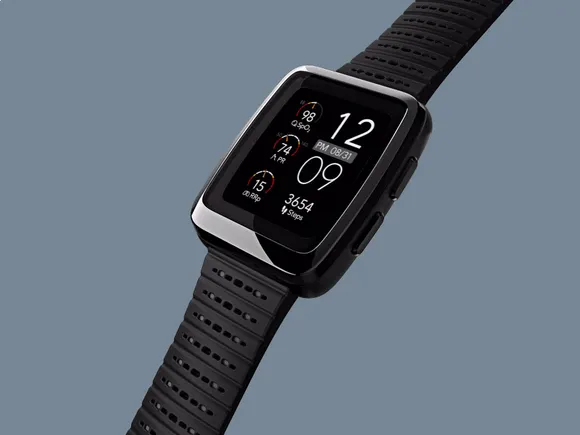
Apple's move into personal health monitoring through wearable devices has triggered a series of legal lawsuits. After the Apple Watch added heart monitoring features, AliveCor sued Apple in 2020, and the resulting series of cases has laid the groundwork for the U.S. International Trade Commission (ITC) to ban imports of the wearable device, while the U.S. Patent Trial and Appeal Board (PTAB) has ruled against AliveCor.
Meanwhile, pulse oximetry specialist Masimo took Apple to court over other Apple Watch features. The dispute began in 2020, when Masimo filed a trade secret lawsuit against Apple. Masimo claimed that Apple stole the company's trade secrets through its former employees. Last month, a court ruled in favor of Masimo in a case involving the illegal theft of trade secrets by a former engineer who moved to Apple.
Masimo's trade secret lawsuit against Apple is scheduled for trial in March. Masimo filed a complaint with the trade commission last year. That trade ruling is expected early next year and could ban imports of Apple Watches containing technology Masimo claims as its own.
The patent dispute between AliveCor and Apple could reach a critical point next week, when a U.S. International Trade Commission judge rules on a case that could determine whether Apple Watches using technology AliveCor claims as its own face an import ban.
The world's largest company
"The world's largest company should not be allowed to escape legal liability for its pattern of illegal behavior against smaller competitors," said a spokesperson for the medical technology company. Apple, which is expected to generate $400 billion in revenue in 2022, is one of the leading companies in the consumer wearable device market and has been actively adding health-related features to its smartwatch, including the ability to detect atrial fibrillation and Parkinson's disease.
Apple and AliveCor have been embroiled in a legal dispute since 2021, with AliveCor claiming Apple infringed on its patents for wearable systems used to detect irregular heart rhythms. Apple recently filed its own patent lawsuit against the company, stating in the complaint that it wants to "clarify the facts" about who invented the technology.
AliveCor's ITC ruling was originally scheduled for Monday but was postponed to December 20. After the PTAB found AliveCor's 30 claims unpatentable, Apple filed an emergency motion with the ITC.
After facing multi-pronged attacks from Masimo, Apple struck back in October, filing two lawsuits against the Irvine, California-based medical monitoring and device company. Masimo entered the consumer health tracking wearable space earlier this year with the launch of the W1 watch and health tracking devices. The lawsuit states, "Masimo did not independently innovate and develop products, but instead copied Apple while filing patent lawsuits in an attempt to block Apple Watch sales."
Masimo's counterclaims
Now, Masimo is responding with a broad set of counterclaims, accusing Apple of violating antitrust laws, false advertising, and deceptive trade practices, while also infringing on its patents.
"Masimo alleges that Apple has infringed Masimo's patents, violated federal competition laws, and made false representations to consumers regarding key features of the Apple Watch," said a Masimo spokesperson. Apple representatives did not respond to requests for comment as of press time.
In the antitrust counterclaim, Masimo accuses Apple of violating federal antitrust laws by fraudulently obtaining patents from the U.S. Patent and Trademark Office and using its power over iOS app distribution to exclude or delay apps, thereby harming Masimo and other health watch market participants. Masimo argues that Apple seeks to exclude competitors, eliminate consumer choice, and flood the market with technologically inferior devices.
At the core of Masimo's false advertising allegations is that Apple misleads consumers into purchasing and relying on the Apple Watch for health monitoring, despite its features being inadequate for such uses.
Apple achieved a partial victory in the AliveCor case, praising the PTAB ruling and stating that its health, wellness, and safety features were independently developed and integrated into the Apple Watch.
AliveCor will appeal
AliveCor Chief Strategy Officer Sanjay Voleti said the patent ruling was wrong. "We are deeply disappointed and strongly disagree with the PTAB's decision, and we will appeal," Voleti said in an interview.
Voleti said he remains "cautiously optimistic" that the ITC will rule in AliveCor's favor based on a preliminary ruling in June that found Apple infringed on two of AliveCor's patents. "The PTAB and the ITC are two separate agencies that make decisions independently," he added.
Apple said in a statement on December 9: "We appreciate the Patent Trial and Appeal Board's careful consideration of these patents, which were found invalid. Apple teams work tirelessly to create products and services that empower users, including the industry-leading health, wellness, and safety features we independently developed and integrated into the Apple Watch. Today's decision confirms that the patents AliveCor asserted against Apple at the ITC are invalid."
Apple did not immediately respond to a request for comment on the Masimo case.
AliveCor, headquartered in Mountain View, California, originally produced products that attached to the back of smartphones to detect abnormal heart rhythms and atrial fibrillation. In 2017, the company developed the KardiaBand, an ECG wristband that works with the Apple Watch.
Two years later, after Apple received FDA clearance for its built-in ECG feature, AliveCor withdrew the product from the market. Today, AliveCor produces small handheld devices that pair with smartphones and are said to detect up to six different arrhythmias.
Voleti said the company has also filed another anticompetitive lawsuit against Apple, stemming from a WatchOS update that prevented AliveCor and other developers from accessing information needed for algorithms to function properly.
'Bullying'
"This seems to be driven by Apple's attempt to build a walled garden that eliminates choice," Voleti said. "This is essentially anticompetitive bullying, and that's the core of the lawsuit."
AliveCor said the PTAB ruling will not affect its ability to sell any of its existing products. Even if it loses in the ITC case, there are still other companies in the market selling consumer-facing ECG data analysis devices. Voleti said this case is about more than just patents.
"The key point is that through Apple, we have the opportunity to reach more customers and provide this quality service and capability to more people with better AI and better-performing products and services," Voleti said. "All we are asking for is a level playing field so we can truly compete and bring the results to everyone who can benefit from them."
Editor's note: This story has been updated with additional information regarding the legal dispute between Apple and AliveCor.