
Dexcom and Abbott intensify direct-to-consumer marketing to compete in the growing diabetes market
As more insurance companies expand coverage for continuous glucose monitoring (CGM) devices, Dexcom and Abbott are ramping up direct-to-consumer marketing to compete in this rapidly growing market. Dexcom aired a Super Bowl ad in 2023, while Abbott reaches potential users through television, social media, and magazine advertisements. Analysts expect the U.S. CGM market to grow from its current $4 billion to $10 billion by 2025. Both companies are targeting patients with type 2 diabetes and plan to launch or expand related product lines.
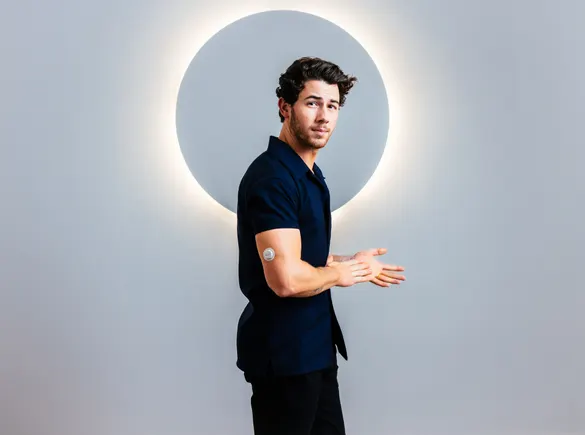
In Dexcom's latest Super Bowl ad, singer Nick Jonas tosses a coin-sized glucose monitor into the air.
"This little thing is the next big thing," he says in the ad that aired in February.
These wearable devices replace the finger-prick blood tests that people with diabetes need to monitor their glucose levels, and sales are expected to grow as more insurers expand coverage. In April,Medicare expanded coverage of the device to more people with type 2 diabetes, a decision that Dexcom CEO Kevin Sayer called "the largest access expansion in the history of the CGM industry" during an earnings call that month.
Chicago-based Abbott Laboratories and San Diego-based Dexcom are the two major sellers of continuous glucose monitors (CGMs), and they are competing for share in the global diabetes technology market. The battle has spilled onto TV screens, magazine ads, and online platforms, as both companies try to reachmillions of potential customers。

A growing market
The CGM market in the U.S. is currently worth $4 billion, according to William Blair analyst Margaret Kaczor. Assuming more people with type 2 diabetes who inject long-acting basal insulin daily or use no insulin at all start wearing these devices, the market could expand to $10 billion by 2025, according to a July 27 report from Kaczor's firm.
To achieve that goal, medical device companies are borrowing advertising strategies from the pharmaceutical industry, telling patients to "ask your doctor if a prescription is right for you."
"You can spend a lot of money and create a lot of awareness, and I think that's really what they're trying to do," Kaczor said in an interview.
Kaczor noted that about 2 million people in the U.S. have type 1 diabetes, and another 2 million have type 2 diabetes and are intensive insulin users, meaning they need multiple daily insulin injections.
Another 3 million people with type 2 diabetes use basal insulin. Medicare recently began covering CGM costs for this patient group, and commercial insurers are expected to follow. Medicare has also started covering patients who do not use insulin but have a history of hypoglycemia.
"Continuous glucose monitors have been revolutionary for people with type 1 diabetes and are now the standard of care for people with diabetes," Aaron Turner-Phifer, senior director of health policy at the diabetes research nonprofit JDRF, wrote in an email. "We are encouraged by Medicare's expansion of access to these devices for people with diabetes."
By 2050,researchers estimatemore than 1 billion people worldwide could have diabetes.
Abbott CEO Robert Ford said on an investor call in April that the near-term opportunity is "north of $1 billion," adding that as CMS (the Centers for Medicare and Medicaid Services) reimbursement policies roll out, "it will eventually spill over to U.S. commercial insurers."
The company hopes to grow its FreeStyle Libre CGM sales to $10 billion by 2028, and expanding type 2 diabetes coverage will help achieve that goal. In the second quarter, the company reportedFreeStyle Libre sales of $1.3 billion。
"I don't think this is just a U.S. story. We're seeing other countries around the world start to expand reimbursement as well," Ford said.
Dexcom has not specified how much revenue the coverage decision will bring, but in its July earnings forecast, the companyexpects revenue growth of 20% to 22% this year。
The company also plans to launch a new CGM next year aimed at the approximately 25 million people in the U.S.with type 2 diabetes who currently do not use insulin。

A page from pharma
Dexcom's Super Bowl ad is "a page from pharma: ask your doctor..." Joe Hage, founder of Medical Marcom, a medical device marketing consultancy, wrote in an email. "Painless diabetes management has been around for at least a decade. Changing behavior takes a long time. Consumer-facing marketing is having its moment."
Medical device companies have historically advertised less frequently than pharmaceutical companies. Device makers have aired only three Super Bowl ads in total, all in recent years: Dexcom in 2021 and 2023, and Hologic in 2022 with singer Mary J. Blige.
"Frankly, the medical device industry has underinvested in direct-to-consumer marketing," said William Blair's Kaczor.
"That's definitely changed recently," she added. "I think what's happening is that there are now a lot of devices that are truly applicable to a broader population."
Part of the strategy behind these ads is that as Dexcom and Abbott expand their audience, they are targeting more patients treated by primary care physicians rather than endocrinologists. Kaczor noted that there may be only 8,000 to 9,000 endocrinologists in the U.S., compared with more than 200,000 primary care physicians.
In the past, Dexcom's marketing messages were primarily aimed at endocrinologists, "because we felt that if endocrinologists told people with diabetes what to do, we could reach them," Sayer said in an interview.
"We realized the impact of this technology goes far beyond that, and we need to reach the users," he added. "We started shifting more of our media toward the end user rather than treating the prescriber as the customer."
BTIG analyst Marie Thibault said the Super Bowl ad was "perfect timing" because it coincided with the launch of Dexcom's newest device, the G7, and came two months before Medicare expanded coverage.
"Those two things combined, I think, made the Super Bowl ad cost very worthwhile because you're raising awareness at exactly the right time," Thibault said in an interview.
Sayer declined to say how much Dexcom spent on the ad, but said it was "worth it," noting that the company has added more than 800,000 users since its previous ad in 2021. According toThe Associated Pressreported, a 30-second Super Bowl ad cost up to $7 million in 2023.
The CEO said policy and awareness were the main reasons for advertising, but in terms of short-term metrics like website traffic and leads, "the return is far beyond that."
Abbott, which did not buy a Super Bowl ad, has run TV spots, social media ads, and magazine ads, Thibault said.
"To build awareness, you have to be willing to spend money where consumers are to capture their attention," she said. "I think Abbott, as a consumer health company, is very aware of that."
A battle for share
Currently, Dexcom holds a larger share of the U.S. market for people with type 1 diabetes, while Abbott holds a leading share among those with type 2 diabetes. This is partly because Abbott has sold its products to patients using basal insulin for years through its cash-pay program, while Dexcom is "starting from zero" in this patient group, JPMorgan analyst Robbie Marcus wrote in a June 1 research note.
According to a JPMorgan survey of 50 physicians, more doctors plan to prescribe Dexcom's CGM over Abbott's Libre to type 2 basal insulin patients, but Marcus wrote that Abbott is still expected to capture more than half of prescriptions in 2024.
"We firmly believe Dexcom and Abbott can both be winners—the global CGM market is large enough that success is not mutually exclusive," he added.
Both companies could face broader market shifts in the future, as adoption rates among people with type 1 and type 2 diabetes are expected to continue growing.
UBS Securities, in a March research report, projected that by 2030, 83% of people with type 1 diabetes will use a CGM, and 30% of people with type 2 diabetes will use one. Analysts said there is still room for growth among patients who inject insulin multiple times daily, but adoption will be more limited than in the past five years.
"Given where we are on the adoption curve, this market is more of a share battle than the broad blue-ocean opportunity seen in the non-insulin-intensive patient group," they wrote.
By 2030, analysts estimate that more than half of type 2 diabetes patients using basal insulin will use a CGM, and they see a larger long-term opportunity in the estimated 21 million type 2 diabetes patients who do not use insulin.
"We have to reach those people directly and get them to understand our message," Dexcom's Sayer said.