
Orthopedic Industry Leaders Look Ahead to 2024: Surgery Backlogs, New Technologies, and Market Shifts
After the disruptions caused by the pandemic, the orthopedic industry is gradually returning to normal. In 2024, executives and surgeons are focusing on the persistence of surgery backlogs, device pricing, robotic-assisted surgery, growth in outpatient procedures, and M&A consolidation in the spine sector.
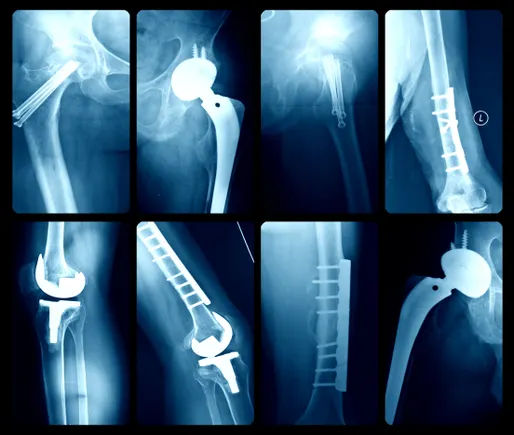
Orthopedic companies are preparing to return to normalcy after several years of turbulence caused by the COVID-19 pandemic.
Last year, the medical technology industry benefited from a "massive patient backlog and pent-up demand, especially for knee and hip replacements," said BTIG analyst Ryan Zimmerman. Last year also saw large-scale spine mergers and acquisitions, including the $3.1 billion deal between Globus Medical and Nuvasive, as well as planned spin-offs in the sector.
Entering 2024, questions facing orthopedic companies include whether the surgical backlog will persist, how to price devices amid inflation and tight hospital budgets, and how new technologies will shape the market.
MedTech Dive spoke with orthopedic executives and surgeons about their expectations for this year. Here are the top five trends they are watching:
1. Surgical backlog no longer a major factor
During the pandemic, orthopedic surgeries were postponed as elective procedures, and the resulting backlog led to strong demand for procedures such as knee and hip replacements, benefiting companies like Stryker and Zimmer Biomet last year.
Whether this backlog will extend into 2024 remains to be seen, but companies say they have not factored it into their forecasts. Zimmer CEO Ivan Tornos expects the first quarter to be "a little choppy," and "as for the rest of the year, we are not counting on the backlog," he told investors earlier this month at the J.P. Morgan Healthcare Conference in San Francisco.
"We don't think it's as significant as others expect," Tornos said. "It's not like you can bring all those patients in every quarter."
Aldo Denti, chairman of Johnson & Johnson's DePuy Synthes group, also expects the backlog to diminish later this year.
"In orthopedics, we see tailwinds in the first few quarters of this year, but expect procedure volumes to normalize in the second half of the year," Denti wrote in an email to MedTech Dive.
Michael Ast, an orthopedic surgeon and chief medical innovation officer at the Hospital for Special Surgery (HSS) in New York, said the backlog has already slowed.
"There was a period when the backlog was very significant, with patients coming in every day," Ast said. "I think we can still see some of that."

2. Device makers tackle pricing challenges
BTIG's Zimmerman said freight costs, supply chain instability, and inflationary pressures that drove up costs last year have begun to stabilize.
"Many companies have implemented price increases to address the inflationary impact we've seen," he said in an interview.
Zimmerman added that sometimes companies are able to pressure suppliers or launch new products with higher average selling prices, which investors view positively.
Brad Cannon, global president of Smith & Nephew Orthopaedics, said inflation has affected every part of the industry.
"Sometimes your prices are going up, sometimes you're passing on costs," Cannon said. "You just have to be very careful and deliberate."
The company focuses on solutions that help healthcare institutions improve productivity and reduce costs. But in terms of absolute pricing, it depends on the market, Cannon said.
"We've done a lot of work with our suppliers to try to reduce costs and ensure we minimize what we pass on. But the reality is there is still significant pressure, and we have to absorb or plan for inflationary pressures."
On the provider side, this has led to difficult decisions about which devices to adopt. Bill Ritchie, a surgeon at New Mexico Orthopaedics, recently attended a meeting about a new implant for treating rotator cuff tears.
"It's so expensive that the company itself told us, if you want to do this, go to the hospital where reimbursement is higher," Ritchie said.
In physician-owned ambulatory surgery centers, "not only would my executive committee not approve it, I don't want to lose money either."
HSS's Ast said rising costs and pressure from insurers are also putting pressure on device companies.
"Manufacturers can't just sell to someone else," Ast said. "The problem is, if you go to a hospital and ask for a 40% price increase because your costs are higher, those products will never reach patients because the hospital simply can't afford it."
Ast added that device manufacturers have a responsibility to prove that the extra cost of new technology is worth it.
3. Surgical robots and personalized medicine
Orthopedic companies currently offer surgical robots for knee, hip, and spine procedures and are expanding into other indications. Zimmer and Stryker are both developing robotic systems for shoulder replacement.
Stryker executives said in September they expect to receive shoulder indication by the end of 2024. Zimmer has not provided a specific timeline but has "repeatedly expressed its commitment to being the first company in the U.S. with a robotic shoulder system," BTIG's Zimmerman wrote in a research note.
Currently, Stryker holds the majority share of the shoulder replacement market at 27%, followed by Zimmer (17%) and Johnson & Johnson (14%), Zimmerman wrote.

Johnson & Johnson's Denti said the company is developing new applications for spine and partial knee replacement for the Velys robot, and he expects the latter to "address many of the unmet needs not addressed by our competitors' systems."
Since the Velys robot was launched in the U.S. in 2021, about 13% of Attune primary knee replacements have been robot-assisted, Denti said, making the system "an integral driver of growth for our business."
Another company, Canary Medical, is partnering with Zimmer to embed sensors in knee implants that can measure a patient's gait, step count, and range of motion. Since receiving FDA approval in 2021, this "smart" knee implant has been in limited market release, and the two companies are collecting enough data to show patient recovery progress through these metrics and alert physicians when patients appear to be falling behind.
In the future, Canary CEO Bill Hunter sees potential for preoperative monitoring, robotics, and postoperative technology to work together.
"Someday, our knee will need to talk to the Rosa robot and influence whether you have a particular procedure," Hunter said. "What I think you'll see in the coming years is that all these interesting technologies... need to converge to harness the true power of all this data collection."
HSS's Ast described this ability to use data to help patients achieve their goals—from deciding the type of surgery to implant positioning—as "the holy grail of orthopedic surgery."
"What excites me more than any specific technology or implant is being able to start quantifying what we do, aggregating data, and learning how to make better decisions for patients over time," Ast said.

4. More procedures moving to outpatient settings
Today, more hip and knee replacements are being performed in hospital outpatient departments (HOPDs) and ambulatory surgery centers (ASCs). This shift is driven in part by the pandemic and changes in Medicare payment policies.
For example, at a hospital like HSS, about 30% of hip and knee surgeries are performed on an outpatient basis, Ast said, with most of his surgeries taking place in that setting. Before the pandemic, that number was closer to 1%.
Ast expects that eventually about half of hip and knee replacements will be done on an outpatient basis, except for revision surgeries, which require complex medical care.
Ritchie's practice partially owns an ASC called the New Mexico Orthopaedic Surgery Center, and he also expects the number of procedures at the center to increase over time.
Ritchie said procedure volume has "risen dramatically" and increases every year—except in 2020.
"In our group, probably close to 90% of knee replacements are done at the surgery center," Ritchie said. "I think shoulders will approach that too."
Last year, the U.S. Centers for Medicare & Medicaid Services (CMS) added total shoulder replacement to its ASC-approved list, meaning Medicare covers the procedure in that setting starting in January.
"I've done a fair number of outpatient shoulder surgeries, but not the majority," Ritchie said. He expects that to change.

Device manufacturers are catering to ASC demand with dedicated sales teams. Zimmer's Tornos said the company has more than 500 ASC contracts in the U.S. About 10%-15% of sales occur in ASCs, and about one-third of robots are installed in ASCs.
Johnson & Johnson's Denti expects that within the next decade, up to 20%-30% of all orthopedic procedures will be performed in ASCs.
"We estimate that 15-20% of our joint reconstruction procedures are already performed in the ASC setting," he wrote in an email. "We believe the current ASC penetration for hips and knees is 10-15% and will continue to climb over the next 3-5 years."
Michael Carter, general manager of Medtronic's Spine & Biologics division, also expects the shift of spine procedures to ASCs to "continue at a moderate pace."
Most of these procedures are in the cervical region, with fewer in the thoracic and lumbar regions, Carter wrote in an email.
5. Mergers and acquisitions in spine
Last year, the spine market saw multiple changes, with companies announcing planned mergers and divestitures. Globus completed its $3.1 billion acquisition of Nuvasive, Orthofix merged with SeaSpine, and Zimvie announced plans to sell its spine business for $375 million, less than two years after spinning off from Zimmer.
These changes "created opportunities for many other players that are viewed as more stable," Zimmerman said in an interview. He cited Medtronic's spine business and Alphatec Spine, which were able to capitalize on the disruption.
"This is not just a reshuffling. Large players are consolidating, and they offer enabling technologies and ecosystems," Zimmerman said.
Medtronic Spine has gained market share over the past two years, "and our trajectory points to further solidifying our position as a market leader in 2024 and beyond," Carter wrote in an email.
He added: "This is a very exciting time in spine, and we welcome all the dynamics in the market."