
U.S. House Committees Advance Budget Reconciliation Bill with Far-Reaching Healthcare Implications
The U.S. House Energy and Commerce Committee and the Ways and Means Committee this week each passed the budget reconciliation bill along party-line votes, including several healthcare provisions such as substantial cuts to Medicaid. The bill is expected to be further adjusted in the House or Senate, but Republicans have welcomed its advancement.
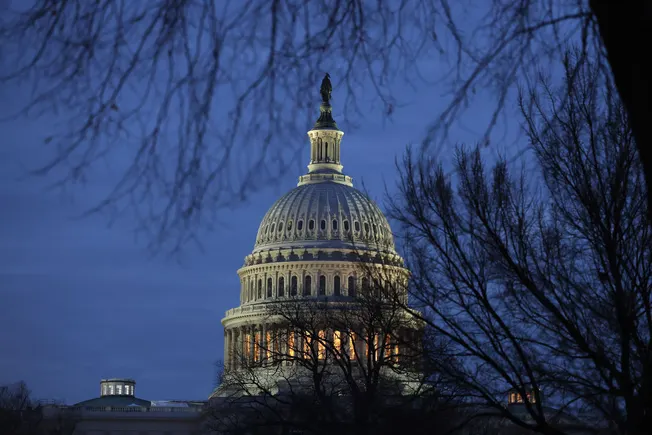
The U.S. House Energy and Commerce Committee (E&C) and the Ways and Means Committee this week held marathon sessions and voted along party lines to advance a Republican legislative package containing multiple healthcare provisions, including significant cuts to Medicaid.
The bill is expected to be adjusted on the House floor or in the Senate. Nevertheless, Republican lawmakers cheered the advancement of this "big, beautiful bill." The legislation combines extensions of tax cuts from former President Donald Trump's first term with other conservative priorities, such as cracking down on illegal immigration and eliminating clean energy programs.
However, to pay for the package's costs, Republicans had to cut substantial funding, including in healthcare. The most aggressive reforms target the safety-net program Medicaid: under E&C's provisions, savings are projected at $625 billion, but according to preliminary estimates from the Congressional Budget Office (CBO), this would cause about 8 million Americans to lose health insurance.
Patient advocacy groups and healthcare providers condemned the legislation for weakening federal support for health insurance programs, which would disproportionately affect low-income Americans, women, immigrants, and people with disabilities.
Democrats also slammed the bill for cutting services for the poor while providing tax breaks for the wealthy—with the largest share of tax cuts flowing to the highest-income American families—but ultimately failed to weaken the legislation, which has left the committees.
E&C passed its text by a vote of 30 to 24 after more than 26 hours of deliberation, while Ways and Means advanced its provisions 26 to 19 after 17 hours. The legislation now heads to the House Budget Committee, which will combine it into a single package. Republicans have set a goal of House passage before Memorial Day and Senate passage in early July, with Senate Republicans more cautious about cuts to health and social welfare programs and likely to moderate the bill.
Here are the main healthcare provisions of the legislation.
Medicaid
E&C approved the most sweeping overhaul in Medicaid's sixty-year history. If the legislation passes as currently drafted, it would significantly change Medicaid's eligibility and funding structure. Medicaid and its sister program for children cover nearly 80 million low-income Americans.
Republicans passed the first federal work requirement for Medicaid beneficiaries. The policy would require able-bodied adults to work, volunteer, or attend school at least 80 hours per month to maintain Medicaid coverage.
Republicans say the goal is to reduce "free-riding" in Medicaid and focus the program on those who truly need help.
"We make no apologies for prioritizing Americans in need over illegal immigrants and those who are able-bodied but choose not to work," E&C Chairman Brett Guthrie, a Kentucky Republican, said during the committee session Tuesday.
However, according to research, the vast majority of Medicaid members already work or qualify for exemptions. Many may instead lose coverage due to difficulty reporting their eligibility to state governments. In the few cases where work requirements have actually been implemented, they have been costly for states to administer and monitor and have not increased employment rates.
The work requirement would not take effect until 2029. This delay is a point of friction for some Republican hardliners who want the policy to start sooner. However, it would push the requirement until after Trump leaves office and current lawmakers face reelection, shielding Republicans from voter backlash—a trend seen in other unpopular policies in the legislation.
The bill also requires Medicaid beneficiaries with incomes at or above the federal poverty line to pay more for certain care, a shift for a program that typically does not include cost-sharing.
It would also increase paperwork burdens for enrollees by adding eligibility verification requirements and requiring states to check eligibility of their Medicaid expansion population twice a year instead of once. States would also have to check beneficiaries' addresses and whether they have died more frequently.
The legislation would also limit Medicaid's retroactive coverage to one month after an individual applies, rather than three months.
Notably, E&C also took steps to limit taxes that states impose on healthcare providers, which allow states to draw more Medicaid funding from the federal government. These taxes are popular among states and providers because they boost low Medicaid rates, but critics view them as a financial maneuver that unfairly inflates Washington's responsibility for Medicaid funding.
The bill would freeze provider taxes at current levels and prevent states from creating new provider taxes. It also limits additional payments states can make to certain providers, capping them at the amount Medicare pays—a significant drop from the status quo, where the cap is at commercial rates.
The legislation also cuts the 5-percentage-point increase in the federal Medicaid matching rate established for expansion states during the pandemic.
"We are being asked to sit in this room today and pretend that cutting Medicaid is some necessary evil, a tough decision made in the name of fiscal responsibility. But that is not what this is. This is a political choice made by my colleagues across the aisle," New York Democratic Rep. Yvette Clarke said during the E&C session Tuesday.
Affordable Care Act
The package takes a gentler approach to the Affordable Care Act (ACA), which may signal that Republicans are reluctant to challenge the popular Obama-era law again. Since its passage in 2010, Republican lawmakers have repeatedly tried and failed to repeal the statute.
Most notably, the Republican legislation does not extend the more generous subsidies for ACA coverage that are credited with driving a surge in marketplace plan enrollment. Allowing the subsidies to expire at the end of 2025 is expected to save the government about $340 billion, but according to CBO data, about 4 million people would lose health insurance.
Congress still has time to act before the end-of-year deadline. But "this is an opportunity. There are many provisions in budget reconciliation. This should be one of them," Wisconsin Democratic Sen. Tammy Baldwin said Wednesday at an Axios event.
"We believe the Senate could still write the enhanced premium tax credits into the text," Jefferies analyst Brian Tanquilut wrote in a report on the draft legislation.
E&C's bill would codify certain eligibility and income verification requirements for enrollees proposed by the Trump administration earlier this year, including tightening enrollment periods and subsidy eligibility verification, and limiting automatic renewal.
The Ways and Means text also prevents people who are automatically re-enrolled from applying subsidies to their coverage. Additionally, it would block low-income individuals from receiving tax credits when enrolling in ACA plans during income-related special enrollment periods.
Individual Coverage Health Reimbursement Arrangements
Buried in the Ways and Means tax reform pages are provisions aimed at codifying the existence of Individual Coverage Health Reimbursement Arrangements (ICHRAs). ICHRAs allow businesses to offer employees a monthly allowance to purchase health insurance on ACA exchanges. The first Trump administration expanded ICHRAs in a 2019 rule.
Since then, these policies have grown steadily, though they still represent a small share of the ACA market. Still, the proposal is a gift to the growing ICHRA industry and to emerging companies and large national insurers investing in these plans.
The Ways and Means legislation renames ICHRA plans as "Customized Health Options and Individual Care Expenses" (CHOICE) arrangements, and also allows employers to reimburse employees' exchange plan premiums through pre-tax payroll deductions. Additionally, it would create a tax credit for small businesses offering CHOICE coverage.
The bill also expands Health Savings Accounts (HSAs), allowing more Medicare seniors, people in direct primary care arrangements, and enrollees in bronze and catastrophic ACA plans to contribute to HSAs, and to use the accounts for more services.
Pharmacy Benefit Managers
The legislation does not include top-to-bottom reforms of pharmacy benefit managers (PBMs) as Congress has pursued in the past. However, it does include some smaller policies that would adjust some of the more controversial business practices of these powerful drug middlemen.
E&C's bill would ban spread pricing by PBMs in Medicaid, a policy with broad bipartisan support. Spread pricing occurs when PBMs pay pharmacies less for dispensing drugs than health plans pay them, pocketing the difference as profit.
The policy was included in the stopgap funding legislation late last year but was removed after billionaire Elon Musk—a close adviser to the president—criticized the package.
The new Republican bill would also prohibit PBMs from being compensated based on a drug's list price, instead limiting their compensation to "fair market true service fees." Essentially, the policy would require PBMs to pass on any savings they obtain when negotiating drug discounts with manufacturers to their payer clients.
This "100% pass-through" model is increasingly popular, with major PBMs committing to expand these arrangements amid criticism that they retain most rebates as profit. Blocking PBMs from keeping rebates was also included in the year-end funding legislation but was removed before the bill was sent to then-President Joe Biden.
E&C's bill would also force PBMs participating in Medicare prescription drug benefits to share more information about their business practices with payer clients, including formulary decisions and prescription drug coverage.
Financial Relief for Hospitals and Providers
E&C's legislation would tie physicians' annual Medicare payment updates starting in 2026 to the Medicare Economic Index, a measure of medical cost inflation.
This is a major victory for physician groups, who argue that Medicare reimbursement has failed to keep pace with rising business costs. The congressional advisory panel said late last year that the policy would provide doctors with more financial stability.
The Republican bill also delays billions of dollars in Medicaid payment cuts targeting Disproportionate Share Hospitals (DSH)—facilities serving large numbers of vulnerable patients—until 2029. Hospital groups have criticized these cuts and say they would add financial pressure to DSH facilities, many of which already operate on thin margins.
Additionally, the legislation delays until 2035 the Biden administration's staffing standards for long-term care facilities, which were designed to ensure quality of care. The staffing requirement faced strong opposition from nursing homes, which argued they could not afford the wages to comply.
These standards were originally set to begin phasing in in 2026. However, earlier this year, a judge struck down the requirement.
Artificial Intelligence
E&C's bill would prohibit states from enforcing any AI-related laws or regulations for 10 years.
Although not specifically health-related, the proposal would affect several state laws that impose oversight on AI applications in the industry, including bans on payers using algorithms to deny patient care and requirements that providers inform patients when AI is used.
States have filled the void left by Congress, which has failed to pass any significant AI legislation despite the surge in AI technology adoption and its real impact on patient care.
The ban suggests Congress may intend to pass nationwide AI legislation. But in the meantime, the moratorium is a gift to tech companies, which complain about the difficulty of complying with a patchwork of state laws, effectively removing the only external check on the industry.
Earlier this year, Trump rescinded Biden's directive for HHS to implement oversight of AI applications in healthcare, favoring a hands-off approach that allows AI developers to operate largely unconstrained. However, the administration has embraced AI as an aid in its sweeping overhaul of federal programs, with top health regulators touting the technology as a tool to improve health research, access, and affordability.
The Ways and Means legislation would also allocate $25 million to HHS to contract with AI companies to track and recover overpayments in Medicare.
Culture Wars
Through the legislation, Republicans are also cutting health programs and funding for specific communities that are long-standing targets of MAGA Republicans, including transgender people and immigrants, as well as specific services such as abortion care.
The E&C text would prohibit Medicaid from paying for gender-affirming care for transgender individuals under 18. It also bans gender-affirming care as a benefit that ACA insurers must cover in their plans.
The legislation also prohibits Medicaid from funding nonprofit family planning organizations that provide abortion care—in other words, Planned Parenthood. As a result, according to Colorado Democratic Rep. Diana DeGette, 1 million Planned Parenthood patients who rely on Medicaid could lose access to services such as cancer screenings and health checkups.
The E&C bill would also cut federal funding to states that allow immigrants without proof of citizenship to enroll in Medicaid. If implemented, the policy would affect a handful of Democratic-led states such as California and New York.
Similarly, the Ways and Means legislation would make broad categories of immigrants—including those granted asylum or temporary protected status—ineligible for Medicare or for premium tax credits to purchase ACA coverage.
Noncitizen immigrants, even those legally present, with incomes below the poverty line and waiting for Medicaid coverage, would also no longer receive these credits.