
Stryker cyberattack has 'material' impact on first-quarter results
Stryker's first-quarter sales growth was only 2.6%, well below prior-year levels, due to a March cyberattack that disrupted orders, shipping, and manufacturing for several weeks. The CEO called the impact 'material,' but the company maintained its full-year organic growth guidance of 8%-9.5%, and analysts generally view its long-term prospects favorably.
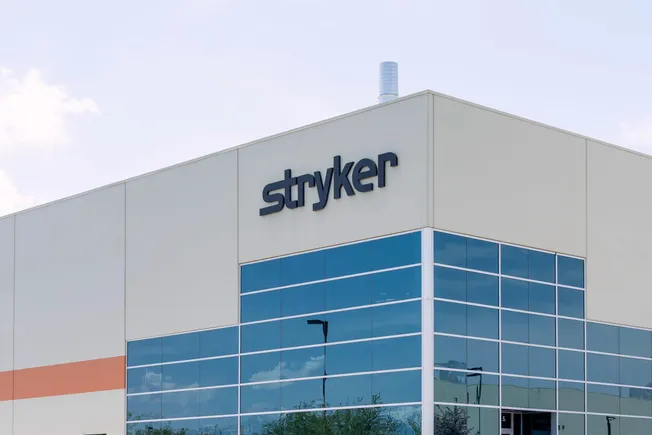
A cyberattack that together caused weeks of disruptions to Stryker's orders, shipping, and manufacturing significantly weighed on the company's first-quarter performance.
CEO Kevin Lobo told investors on Thursday that the cyberattack had a "material" impact on Stryker's growth.
"The cyber event had a significant impact on our results, and the impact varied across our businesses due to differences in go-to-market models and revenue recognition processes," Lobo said. "This caused distortion in our first-quarter results, but we expect it to normalize gradually throughout the year."
Stryker did not provide a specific dollar amount for the cyberattack's impact on last quarter's sales, and the company declined to share the data with MedTech Dive.
Stryker reported first-quarter sales of $6 billion, up 2.6% year over year. That growth rate is significantly below Stryker's usual level—for example, net sales growth in each quarter last year ranged from 10% to nearly 12%.
RBC Capital Markets analyst Shagun Singh noted in a Friday note to clients that Stryker's organic sales came in about $317 million below consensus expectations.
Despite the first-quarter sales impact, Stryker maintained its full-year guidance: organic sales growth of 8% to 9.5% and adjusted earnings per share of $14.90 to $15.10.
Executives said on the conference call they are confident that business lost in the first quarter will be recovered over the remainder of the year.
"We'll see some recovery in the second quarter, and then we'll see more recovery over the remainder of the year, ultimately getting to the full-year guidance we mentioned," said Chief Financial Officer Preston Wells.
Stryker suffered the cyberattack on March 11. The company's global Microsoft environment was disrupted, interrupting orders, shipping, and manufacturing for several weeks until operations fully resumed in the first week of April.
According to Check Point Research, the attack was claimed by an Iran-linked threat actor tracked as Handala. In addition to operational disruptions, the group claimed to have wiped thousands of servers and mobile devices and stolen data.
Lobo said the cyberattack resulted in 40,000 laptops being wiped. He added that due to the operational disruptions, the company lost some surgical opportunities, and some sales representatives were unable to enter hospitals. However, Lobo insisted the company did not lose overall business.
"We came out of this event very strongly," Lobo said. "I can't think of any business we truly lost."
Stifel analyst Rick Wise, while acknowledging the first-quarter impact of the cyberattack, remains positive on Stryker's long-term outlook.
"Stryker's first quarter did miss consensus due to the mid-March [Stryker] cyber event," Wise wrote in a note to investors. "However, healthy end-market trends and the expected business recovery over the remainder of 2026 suggest Stryker is still on track for a strong growth year."
J.P. Morgan analyst Robbie Marcus is similarly confident in Stryker's future.
"This print did not raise numbers, but Stryker remains one of the highest-quality, most consistently fastest-growing companies in MedTech, and we believe investors will gravitate toward it once the worst is behind," Marcus wrote.