
Stereotaxis Completes Acquisition of Robocath
Stereotaxis has completed its acquisition of French surgical robotics company Robocath, with a total deal value of up to $45 million, including a $20 million upfront payment and up to $25 million in milestone payments. The two parties will integrate their robotics technologies in electrophysiology, interventional cardiology, and neurointervention to drive the development of next-generation systems. Robocath's R-One+ robot is already available in Europe and China, and its next-generation system is expected to be submitted for regulatory approval in the United States and Europe within two years.
News Summary
- Stereotaxis announced on Thursday that it has completed the acquisition of French surgical robotics company Robocath.
- The deal, announced in April, has a total value of up to $45 million and brings together two robotics developers focused on endovascular interventions.
- The companies said that combining their technical expertise will accelerate the development of next-generation robotics in electrophysiology, interventional cardiology, and neurointervention.
In-Depth Analysis
In November, Stereotaxis received FDA clearance for its latest-generation robotic magnetic navigation system, GenesisX, which is used in ablation procedures to treat arrhythmias. GenesisX was redesigned to address the low adoption rates of earlier robotic models due to hospital infrastructure limitations.
Since then, Stereotaxis has also received FDA authorization for its proprietary catheter, MAGiC, which works with its robot, and has launched the digital operating room system Synchrony. Meanwhile, the company is gradually winding down its catheter supply partnership with Johnson & Johnson.
In May, CEO David Fischel said the company's new product portfolio is showing "early signs of commercial success."
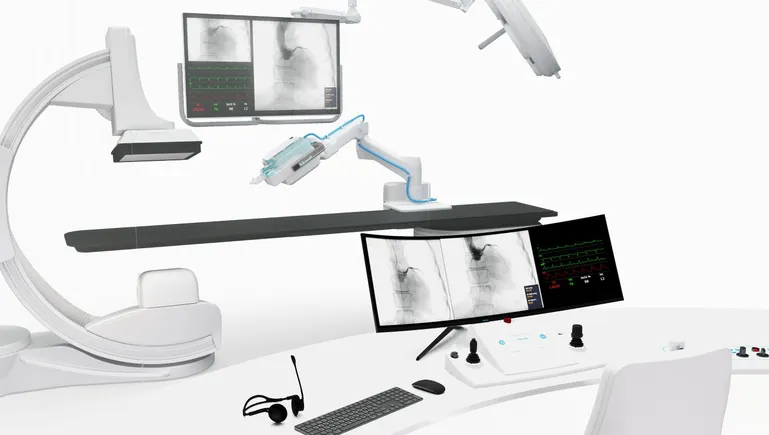
Robocath was founded in 2009 by current CEO Philippe Bencteux. Its R-One+ robot is available in Europe and China to assist in percutaneous coronary interventions to open blocked arteries.
Robocath is also developing a next-generation robot capable of simultaneously manipulating up to five interventional devices. Stereotaxis plans to accelerate the development of this new system and submit regulatory applications in the United States and Europe within the next two years.
Under the terms of the acquisition, Stereotaxis paid a $20 million upfront fee and may pay up to an additional $25 million, tied to regulatory and commercial milestones, including FDA approval of Robocath's next-generation system.