
Aidoc Submits Generative AI Imaging Device to FDA, Exploring New Regulatory Pathways
Aidoc's First Read system uses generative AI to interpret chest X-rays and generate reports, and has received FDA Breakthrough Device designation. CEO Elad Walach details the technology principles, safety validation strategies, and future plans.
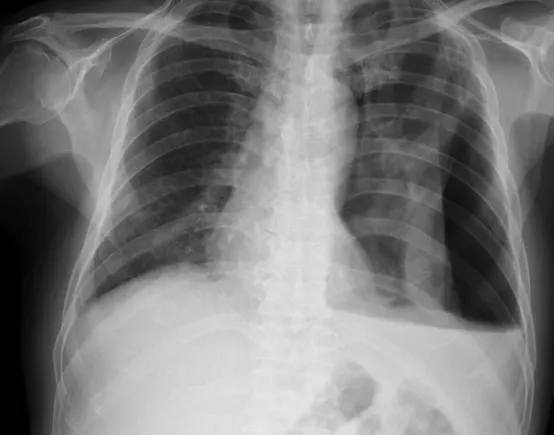
In June of this year, the U.S. Food and Drug Administration (FDA) granted Aidoc a Breakthrough Device Designation for a tool that uses generative AI to interpret images and automatically generate reports. The feature, called First Read, is designed to detect multiple health conditions from chest X-rays and draft reports for radiologists to review.
This breakthrough designation means the product can receive priority review from the FDA, which is particularly significant—the FDA is still developing a regulatory framework for medical devices that use generative AI, and there are still many unresolved questions in the industry about best practices and patient safety measures for such technologies.
MedTech Dive spoke with Aidoc CEO Elad Walach to gain deeper insight into how the First Read system works and the company's specific approach to safety and validation.
This interview has been edited for length and clarity.
MedTech Dive: How does First Read work?

Elad Walach: What makes First Read unique is that while it ultimately outputs a report, there is a whole chain of models running behind it.
First, there is the initial detection model. Then, the system generates content and integrates it into a structured report. At the detection level, it can identify over 100 conditions and draft a complete report based on that.
This is the first time we have achieved end-to-end AI diagnostics, so this is an important milestone.
The Breakthrough Device Designation allows us to accelerate the path to market while ensuring we still meet the same safety and quality guardrails. We believe this designation was necessary. Especially for a device of this scope, discussing safety is critical.
Today, anyone can upload an X-ray to ChatGPT and get a report, but doing it accurately is very complex. In most cases, the AI's performance must be nearly on par with human physicians, otherwise doctors won't adopt it and will choose to do the work themselves. Therefore, the safety and accuracy bar for such devices is very high.
With multiple findings, how do you ensure safety and accuracy?
The most critical factor is the accuracy of the model itself. Over the past year, we have raised more than $300 million. This is because training these models is extremely expensive—there are no shortcuts, and they must be trained on large amounts of data.
The second key element is validation. When models are this large, validation becomes a huge task—how do we validate across so many conditions? This is exactly why we chose the Breakthrough Device pathway. The core question is: how do you validate? How do you ensure the model's safety initially and as it is deployed more broadly later?
After receiving the breakthrough designation, what are your next steps?
The Breakthrough Device Designation is just a step along the way; the product is not yet formally approved, so we still need to complete clinical trials and obtain marketing authorization from the FDA.
Our plan is to cover nearly all common conditions in CT and X-ray exams within the next year and a half.
About a year ago, I would never have said that, because I thought it was impossible... and now First Read can cover more than 100 conditions at once.
That is our expectation and what we believe is achievable. But on the other hand, I have to say, we will never launch a product that we do not believe is safe. So, if a feature does not meet safety and quality standards, even if it takes another year, that is the most important thing.
How does this tool fit into the radiologist's workflow? How do they interact with it?
As the name suggests, I envision this playing the role of a 'first read.' The AI performs the initial interpretation, and then the physician reviews, evaluates, and makes modifications. Clearly, the physician still has the final say.
What do we want from AI? Greater interpretive safety and accuracy, shorter diagnostic times, and greater processing capability. It all ultimately comes down to the question of model accuracy. If the report I draft for you is of poor quality most of the time, you will gradually lose trust and prefer to start from scratch. But if the initial draft I provide is of high enough quality, then this model becomes the new standard.
I've noticed some discussions about concerns regarding how to prevent professional skill degradation or over-reliance on AI suggestions. How do you view these challenges?
I agree with those concerns; they are indeed very valid. In my view, the biggest risk is the dependency that comes with automation. We should anticipate this issue and need to mitigate it. I think mitigation is largely related to workflow design. How do we ensure continuous human oversight and mandate that human physicians remain actively involved? I think that will be key, at least until the technology gains more trust.
At the same time, you need to clearly understand on which types of cases the model performs well and on which types it performs poorly, so transparency is very important.